
11 Best Iranian Dance Songs: Persian Floor Fillers
Quick Comparison Table
| # | Song | Artist | Year | Style | Best For |
|---|---|---|---|---|---|
| 1 | Dokhtar Irooni | Googoosh | 1970 | Classic Pop | Timeless opener |
| 2 | Bejour Bebeen | Viguen | 1968 | Old-school dance | Warm-up set |
| 3 | Leila | Dariush | 1975 | Romantic dance | Mid-set emotion |
| 4 | Boro Boro | Shohreh Aghdashloo | 1977 | Funk-pop | Peak energy |
| 5 | Madar | Sattar | 1980 | Heartfelt pop | Crowd singalong |
| 6 | Vay Vay | Andy & Kouros | 1990 | Synth dance | Party peak |
| 7 | Heyf | Ebi | 1988 | Melancholic dance | Late-night mood |
| 8 | Joonam | Shahram Shabpareh | 1985 | Dance-pop | High energy |
| 9 | Irano Doost Daram | Martik | 1991 | Upbeat pop | Diaspora anthem |
| 10 | Tanha Tanha | Faramarz Aslani | 1977 | Mellow groove | Cool-down |
| 11 | Shab Ke Mirai | Hayedeh | 1974 | Classic ballad-dance | Emotional closer |
When I first started spinning records at Persian weddings in Los Angeles back in the early 2000s, I had no idea that hunting down the 11 best Iranian dance songs would become one of the most rewarding obsessions of my career. Iranian music hit me differently — the scales, the rhythms, the raw emotion packed into every bar made every other genre feel a little flatter by comparison.
Over two decades behind the decks, I’ve watched Persian dance floors erupt to classics that most Western music fans have never heard of, and I’ve seen grown adults weep and spin simultaneously to songs recorded before some of my crowd was born. That emotional complexity — joy and longing woven together — is the defining characteristic of great Iranian dance music. Nobody does it quite like this.
I’ve put together this list with both the diaspora and the curious newcomer in mind. Whether you’re planning a Persian party playlist, digging into Iranian pop history for the first time, or just want to understand why these songs still destroy dance floors fifty years after they were recorded, you’re in the right place. These eleven tracks are the real deal — tested on real crowds, refined over real years.
Table of Contents
List Of Iranian Dance Songs
1. Dokhtar Irooni — Googoosh
🎯 Why this made the list: Googoosh is the undisputed queen of Iranian pop and this track is the one that every DJ reaches for first when a Persian dance floor needs igniting.
📅 1970 · 🎵 Persian pop-dance · ▶️ 8.2M views · 🎧 4.1M streams
Dokhtar Irooni [Iranian Girl] was released in 1970, right in the middle of Googoosh’s imperial phase when she was the most recognisable face in Iranian entertainment. Born Faegheh Atashin, Googoosh had already been performing since childhood, but by the late 1960s she was evolving into a cultural icon who blended Western pop sensibilities with deeply Persian musical DNA. This track sits squarely in that golden period.
Musically, the song rides a buoyant mid-tempo groove that manages to feel both modern and classically Persian at the same time. The melody draws on traditional dastgah scales — those microtonal inflections that give Iranian music its distinctive emotional pull — while the arrangement nods firmly toward the international pop production of the era. It’s that fusion that makes it so danceable across generations and cultural backgrounds.
I’ve opened more sets with this track than I can count. There’s something about those first few bars that tells a Persian crowd they’re in safe hands — that the DJ knows where he’s coming from. I played it at a wedding in Westwood in 2004 and watched a grandmother and her teenage granddaughter dance together for the entire song without a word passing between them. That’s the power of Googoosh.
The song cemented Googoosh’s status as Iran’s biggest pop star before the 1979 revolution dramatically changed her career trajectory. After the revolution, she was prohibited from performing for over two decades, which only deepened the nostalgic weight these recordings carry for the Iranian diaspora. When she finally returned to performing internationally in 2000, Dokhtar Irooni was among the songs that brought audiences to tears.
2. Bejour Bebeen — Viguen
🎯 Why this made the list: Viguen pioneered the Persian dance-pop blueprint that every artist after him followed, and this track is his most irresistible groove.
📅 1968 · 🎵 Old-school Persian dance · ▶️ 3.4M views · 🎧 1.8M streams
Viguen Derderian — known simply as Viguen — was an Armenian-Iranian singer who became one of the most beloved entertainers of pre-revolutionary Iran. Bejour Bebeen [Look How It Is] came out in the late 1960s when Iranian pop music was experiencing its first real golden age, heavily influenced by Egyptian and Western sounds but filtered through something uniquely Persian. Viguen brought a lightness and charisma to his performances that nobody else in the scene could match.
The track’s defining feature is its rhythmic bounce — a loping, almost playful groove built on traditional Persian percussion with a horn section that feels like it wandered in from a 1960s American soul record and decided to stay. The call-and-response structure in the vocal melody makes it a natural crowd-participation anthem, and that quality translates perfectly from the cassette player to the club speaker. Very few songs from this era feel this genuinely alive.
I discovered Viguen through an older Persian DJ friend in London who handed me a cassette compilation and told me to learn these records before I played a single Persian gig. Bejour Bebeen was the first track on that tape, and I immediately understood why. There’s a rhythmic intelligence in Viguen’s phrasing that you feel in your hips before your brain catches up — which is exactly what you need at 11 PM when the dance floor is starting to warm up.
Viguen’s legacy is enormous in the Iranian diaspora community, where his recordings have been lovingly digitised and re-shared across YouTube, Instagram, and WhatsApp group chats for years. He passed away in 2003, but his music remains a staple of Persian parties worldwide. This song in particular gets requested at almost every event I play — which, after twenty-plus years, still impresses me.
3. Leila — Dariush
🎯 Why this made the list: Dariush brought rock-influenced power to Persian pop and Leila is the track that still makes grown men on dance floors lose their composure entirely.
📅 1975 · 🎵 Romantic Persian rock-pop · ▶️ 12.1M views · 🎧 5.6M streams
Dariush Eghbali recorded Leila in 1975 at the peak of pre-revolutionary Iranian pop’s sophistication. By this point, Iranian musicians had fully absorbed Western rock and pop influences and were doing something genuinely extraordinary with them — grafting those arrangements onto Persian melodic traditions to create a sound that had no real equivalent anywhere else. Dariush was one of the most gifted voices of that era, capable of conveying heartbreak at a volume that could rattle windows.
The song opens with a simple guitar figure before the full arrangement comes in, and that moment of anticipation before the band drops is something I’ve used as a structural cue dozens of times when building a set. The melody is built around a winding chromatic descent that’s pure Persian classical influence, but the rhythm section swings in a way that keeps your feet moving even when your heart is breaking. It’s a genuinely rare achievement.
I use Leila as a mid-set emotional pivot — the moment when I want to remind the dance floor that Iranian music isn’t just about party energy but about depth and feeling. The response is always the same: the crowd gets closer together, arms go around shoulders, and people sing at the top of their lungs. That collective emotional release is what makes this music special, and Dariush understood it better than almost anyone.
Dariush left Iran after the 1979 revolution and continued his career in Los Angeles, where he became a cornerstone of the thriving Iranian-American music scene. Leila has been covered, sampled, and referenced dozens of times over the decades, and it remains one of the most-streamed pre-revolutionary Iranian songs on Spotify. Its YouTube view count continues to climb as younger generations discover it through their parents and grandparents.
4. Boro Boro — Shohreh Aghdashloo
🎯 Why this made the list: Before her Hollywood career, Shohreh Aghdashloo was a pop singer with serious funk in her step, and Boro Boro is her most explosive dance moment.
📅 1977 · 🎵 Persian funk-pop · ▶️ 2.1M views · 🎧 890K streams
Yes, that Shohreh Aghdashloo — the Academy Award-nominated actress best known to Western audiences from House of Sand and Fog and The Expanse — had a music career in Iran before the revolution that most of her international fans know nothing about. Boro Boro [Go Go] was recorded in 1977 and represents the funkiest corner of late 1970s Iranian pop production, with a rhythm section that clearly had an ear on American soul and funk records coming out of that era.
The track is built on a tight, syncopated groove with a bass line that means business from the very first bar. Aghdashloo’s vocal delivery here is assertive and playful in a way that’s quite distinct from the more tender, melancholic style that dominated much of Iranian pop. There’s a confidence in how she rides the rhythm that makes the song feel almost defiant — which, given the cultural changes that were coming in 1979, gives it an unintended poignancy in retrospect.
I started including this one in my sets after a friend pointed it out to me about twelve years ago, and I was genuinely stunned by the reaction. Younger Iranian-Americans who knew Aghdashloo only as an actress would often do a double take when I told them who they were dancing to. That moment of recognition — the delight and surprise on their faces — is one of the reasons I love digging in this music. There’s always something extraordinary waiting to be discovered.
The song’s cultural significance extends beyond its musical qualities. It represents a pre-revolutionary Iran that was cosmopolitan, creatively adventurous, and engaged with international popular culture in sophisticated ways. For the diaspora, recordings like this are both celebration and elegy — a reminder of a cultural world that was interrupted and scattered, but never entirely lost.
5. Madar — Sattar
🎯 Why this made the list: Sattar’s post-revolution exile recordings hit the diaspora community like nothing else, and Madar [Mother] is the track that empties every Iranian dance floor of dry eyes.
📅 1980 · 🎵 Emotional Persian pop · ▶️ 6.8M views · 🎧 3.2M streams
Sattar began recording in Iran before the revolution but found his true artistic voice in exile after 1979. Madar [Mother] was recorded in Los Angeles in the early 1980s and became one of the defining anthems of the Iranian diaspora experience — a song about longing, displacement, and the unbreakable bond between an exiled person and their homeland. The timing of its release, just as hundreds of thousands of Iranians were processing the trauma of forced emigration, made it an instant and enduring classic.
Musically, Madar operates in that exquisite Persian space between dance music and emotional reckoning. The tempo is deliberate enough to allow dancing but the melodic weight of the song pulls you inward at the same time. The production is spare by the standards of the era — voice, strings, and rhythm — which only amplifies the emotional directness of Sattar’s vocal. There are notes in his delivery that don’t exist in Western scales, microtonal bends that carry entire lifetimes of feeling.
I always think carefully about when to play this one. It’s not a track you throw in casually — it commands a room and requires the crowd to be ready for it. When I’ve placed it right, usually in the latter half of a set when people have danced enough to lower their defences, the response is extraordinary. I’ve seen people stop dancing mid-floor and just stand there, absorbing it, tears running down their faces. That’s not a failure of the dance floor. That’s exactly what the music is supposed to do.
Sattar continued recording and performing for the Iranian diaspora across North America and Europe throughout the 1980s and 1990s, becoming one of the most beloved figures in exile Persian music. Madar has been streamed millions of times and consistently appears at the top of fan-compiled lists of essential Iranian songs. It is, in the truest sense, a song that belongs to a people.
6. Vay Vay — Andy & Kouros
🎯 Why this made the list: Andy & Kouros defined the 1990s Persian synth-dance era and Vay Vay is the peak-time anthem that still clears space on the floor for serious dancing.
📅 1990 · 🎵 Persian synth-dance · ▶️ 9.4M views · 🎧 4.7M streams
Andy Madadian and Kouros Yaghmaei formed one of the most commercially successful duos in the history of Iranian exile music, recording prolifically out of Los Angeles throughout the late 1980s and 1990s. Vay Vay arrived at the beginning of the decade and immediately became a staple of Persian parties across North America and Europe. The timing was perfect — a generation of young Iranian-Americans who had grown up in exile were coming of age and hungry for music that felt modern but was undeniably theirs.
The production on Vay Vay is firmly rooted in the synth-pop and freestyle sounds that dominated American and European dancefloors at the turn of the decade, but the melodic phrasing and vocal ornamentation are pure Iranian tradition. That synthesis is what made Andy & Kouros so important — they demonstrated that Persian music could speak the language of contemporary pop without losing its essential character. The chorus is one of those instinctive, arms-in-the-air moments that great dance music lives for.
This track was already a party staple when I started DJing, and it remains one of the most reliable floor-fillers I own. There’s something about the energy of that production — the bright synth stabs, the punchy drum machine, Andy’s soaring vocal — that translates across every venue I’ve ever played it in. Small house parties in the San Fernando Valley, big Persian New Year events at hotel ballrooms, underground nights in East London — it works everywhere.
Andy & Kouros went on to have an extraordinarily prolific career, but Vay Vay remains their signature crowd moment. Andy Madadian also pursued a successful crossover career and has collaborated with artists including Lionel Richie and Jon Bon Jovi, which speaks to the universal communicative power that was always at the heart of his music. The song’s YouTube numbers continue to grow as the Persian diaspora’s second and third generations rediscover their musical heritage.
7. Heyf — Ebi
🎯 Why this made the list: Ebi is one of the great voices of Iranian pop and Heyf [What a Shame] is his most achingly danceable creation — melancholy and movement in perfect balance.
📅 1988 · 🎵 Melancholic Persian dance-pop · ▶️ 5.1M views · 🎧 2.4M streams
Ebrahim Hamedi, known as Ebi, has been one of the most consistently excellent voices in Persian pop for over four decades. Heyf was recorded in 1988 during his Los Angeles exile period, a time when the Iranian diaspora community was developing a vibrant and commercially sophisticated music industry entirely outside Iran’s borders. Ebi was at the centre of that scene — a vocalist of extraordinary range and emotional intelligence whose records sold in enormous quantities across the global Iranian community.
What makes Heyf special is the way its musical structure mirrors its emotional content. The melancholy in the melody and lyrics creates a kind of bittersweet pull that makes the dance groove beneath it feel almost redemptive — as if moving your body is the only rational response to a feeling that words alone can’t contain. The arrangement is beautifully constructed, with a string section that builds the emotional pressure before the chorus releases it. It’s sophisticated songwriting by any international standard.
I reach for Ebi’s records when I want to hold a dance floor at a moment of maximum emotional intensity without breaking the groove. Heyf does that as well as any track in my collection. I remember playing it at a late-night Persian wedding in the early hours of the morning, with the older guests still going strong, and watching the room move with this collective synchronised feeling that I’ve never experienced with any other genre. Iranian music does something to time — it stretches it, makes you feel like you’re existing in multiple moments at once.
Ebi’s career has spanned more than forty years and he remains one of the most respected and beloved artists in Persian music, performing to sold-out audiences across North America, Europe, and Australia. He has been recognised with lifetime achievement awards from numerous Iranian arts organisations. Heyf is consistently cited in fan polls as one of his greatest recordings, and its streaming numbers reflect a deep and ongoing affection for the song that shows no signs of diminishing.
8. Joonam — Shahram Shabpareh
🎯 Why this made the list: Shahram Shabpareh is the king of Persian dance-pop and Joonam [My Darling] is his most electrifying, can’t-stand-still creation.
📅 1985 · 🎵 High-energy Persian dance-pop · ▶️ 7.3M views · 🎧 3.8M streams
Shahram Shabpareh began his career in Iran before the revolution and continued it with extraordinary energy in exile, becoming one of the most recognisable names in the Iranian-American entertainment world. Joonam was recorded in the mid-1980s and captures him in full flight — a singer and performer with an almost supernatural ability to generate heat in a room. His nickname among Persian music fans is “Shadi Bakhsh,” which translates roughly as “the one who brings joy,” and this song is the purest expression of why he earned that title.
The production on Joonam reflects the mid-1980s moment perfectly — big, bright, slightly larger-than-life, with a rhythm track designed to make your feet move whether you want them to or not. The vocal melody is built on one of those simple but devastatingly effective hooks that lodge in your memory after a single listen. Shabpareh has always understood that the job of a dance record is to eliminate every excuse not to dance, and he executes that mission flawlessly here.
I’ve watched Shahram Shabpareh perform live twice, and the energy he brings to a room is genuinely remarkable — he’s one of those rare artists whose recordings somehow capture only a fraction of his live presence. Spinning Joonam at a party always feels like summoning a little bit of that live energy into the room. There’s a generosity in this music — a sense that the artist genuinely wants you to have the best possible time — that comes through in every bar.
Shabpareh has remained one of the most active and beloved live performers in the Iranian diaspora entertainment circuit, regularly selling out venues in Los Angeles, Toronto, London, and beyond. His concerts draw multigenerational crowds in a way that very few artists in any genre manage, which is a testament to the timeless accessibility of his music. Joonam is invariably a highlight of his live sets and a guaranteed floor-filler for any DJ who carries it.
9. Irano Doost Daram — Martik
🎯 Why this made the list: Armenian-Iranian pop star Martik turned “I love Iran” into the diaspora’s most joyful party anthem at a moment when that love was complicated by exile and longing.
📅 1991 · 🎵 Upbeat diaspora pop · ▶️ 4.6M views · 🎧 2.1M streams
Martik Movsisian — known simply as Martik — is an Armenian-Iranian pop singer who became one of the most beloved figures in the Los Angeles Persian entertainment scene during the 1980s and 1990s. Irano Doost Daram [I Love Iran] was released in 1991 and became an immediate anthem for a community still processing the complexities of exile, revolution, and displacement. The song’s unapologetic celebration of Iranian identity resonated deeply at a time when expressing that love publicly felt both necessary and bittersweet.
The music is irresistibly upbeat — a polished, melodically rich pop production with the kind of chorus that gets a room singing along on the first listen even if they’ve never heard it before. Martik’s vocal style has a brightness and warmth that makes every track he touches feel like an invitation, and Irano Doost Daram is his most open-armed moment. The arrangement borrows from Armenian folk influences as well as Iranian pop traditions, creating something that celebrates the multicultural reality of Iranian identity itself.
This song does something particular on a dance floor — it creates a sense of collective pride that’s genuinely moving to witness. I’ve played it in rooms full of people who left Iran before they were old enough to remember it clearly, and the response is always the same: a surge of emotion that expresses itself as pure physical joy. That conversion of longing into celebration is, I think, the highest form of what diaspora music can achieve, and Martik pulls it off brilliantly.
Martik has remained active and beloved throughout his career, performing regularly for the Iranian and Armenian diaspora communities globally. Irano Doost Daram is one of those tracks that has taken on an almost ceremonial quality at Persian events — a moment of shared identity that transcends the usual party energy and becomes something closer to a collective statement. Its streaming numbers are a testament to how deeply embedded it is in the cultural memory of the global Iranian community.
10. Tanha Tanha — Faramarz Aslani
🎯 Why this made the list: Faramarz Aslani created some of the most sophisticated Persian pop ever recorded and Tanha Tanha [Alone Alone] is his most hypnotic groove — a slow-burn that rewards patience.
📅 1977 · 🎵 Mellow Persian groove · ▶️ 3.9M views · 🎧 1.7M streams
Faramarz Aslani is one of the most musically sophisticated figures in the history of Iranian pop — a singer-songwriter whose work drew on jazz, classical Persian music, and Western folk in ways that were genuinely ahead of their time. Tanha Tanha was recorded in the late 1970s before the revolution and represents the most musically adventurous end of the Iranian pop spectrum from that era. It’s a song that demands your full attention while simultaneously making it impossible to keep still.
The groove on Tanha Tanha is unhurried and deeply felt — a mid-tempo swayer built on a guitar figure that draws equally from Persian classical modes and Western jazz harmony. Aslani’s vocal is intimate and conversational in a way that stands in contrast to the more theatrical delivery common in Iranian pop of the era. The production has an organic warmth that sounds genuinely timeless — you could put this record on at a dinner party today and it would feel completely at home.
I use Tanha Tanha as a cool-down track — the moment in a set when I want to shift the dance floor from peak-time energy to something more reflective and sensual. It always works. There’s a sophistication in Aslani’s music that appeals to people who might not normally connect with Persian pop, and I’ve introduced more than a few skeptical non-Iranian friends to the genre through this track. Once they hear those chord changes, they’re in.
Faramarz Aslani’s reputation has, if anything, grown in the decades since the revolution. Younger musicians and music critics both inside and outside Iran have increasingly recognised him as a genuinely significant artist by any international measure — not just an important figure within Persian pop, but a world-class songwriter full stop. Tanha Tanha has accumulated impressive streaming numbers for a recording from the 1970s, suggesting that new listeners are finding it constantly and being captivated by it immediately.
11. Shab Ke Mirai — Hayedeh
🎯 Why this made the list: Hayedeh was one of the most powerful voices in Iranian musical history, and Shab Ke Mirai [The Night You Come] is the track that closes every set I play on a note of absolute, devastating beauty.
📅 1974 · 🎵 Classic Persian ballad-dance · ▶️ 5.7M views · 🎧 2.9M streams
Hayedeh Mortezaei is widely regarded as one of the greatest voices in the history of Iranian music — a singer of such power and emotional depth that her recordings can stop a room cold even decades after they were made. Shab Ke Mirai was recorded in the early 1970s when Iranian classical-influenced pop was at its most magnificent, and it represents the pinnacle of what that genre could achieve. Hayedeh died in 1990 in San Francisco, having spent her final years in exile, and the grief of her loss is permanently woven into how Iranians hear her music.
The song moves between ballad and dance in a way that’s characteristic of the best Iranian music — it builds slowly, with Hayedeh’s voice working through an elaborate melodic improvisation before the rhythm section lifts it into something more propulsive. The classical Persian ornamentation in her vocal — the tahrir, the precise microtonal inflections — is breathtaking by any standard. This is music that requires a vocalist of extraordinary technical ability to bring off, and Hayedeh makes it sound effortless.
I close with this track sometimes, when the night has been long and beautiful and the crowd deserves something that matches the magnitude of the experience. The first time I played it at a large event, I was nervous — it’s not an easy song to end a set with, because it demands so much of the audience emotionally. But the response told me everything I needed to know. The dance floor didn’t empty. People stayed and swayed and some of them cried, and when it ended there was a moment of genuine silence before the applause. That’s a memory I’ll carry for the rest of my life.
Hayedeh’s cultural legacy in the Iranian diaspora is immense and entirely beyond commercial measurement. She is spoken of with a reverence usually reserved for figures who transcend entertainment — poets, national heroes. Her recordings have been digitised, restored, and distributed across every available platform, where they continue to find new listeners. Shab Ke Mirai is among her most beloved recordings and a permanent fixture on any serious Iranian music playlist. It is, quite simply, one of the great vocal performances in world music.
Fun Facts: Iranian Dance Songs
Dokhtar Irooni — Googoosh
Bejour Bebeen — Viguen
Leila — Dariush
Boro Boro — Shohreh Aghdashloo
Madar — Sattar
Vay Vay — Andy & Kouros
Heyf — Ebi
Joonam — Shahram Shabpareh
Irano Doost Daram — Martik
Tanha Tanha — Faramarz Aslani
Shab Ke Mirai — Hayedeh
These songs and the artists behind them represent something much larger than a playlist. They are the soundtrack to one of the great cultural displacements of the 20th century — a body of music that kept a people connected to themselves across borders, decades, and generations. — TBone
Frequently Asked Questions
What is the most popular Iranian dance song of all time?
Googoosh’s Dokhtar Irooni is probably the single most widely recognised Iranian dance track, though Dariush’s Leila gives it serious competition on YouTube and Spotify numbers. In my experience behind the decks, both tracks generate an immediate and powerful response from any Iranian crowd regardless of age, which is the most reliable indicator of genuine, lasting popularity.
What makes a great Iranian dance song?
The best Iranian dance music achieves something I’ve rarely encountered in other genres — it makes you feel deep emotion and move your body simultaneously, without either response diminishing the other. The musical tools are distinct: microtonal vocal ornamentation, Persian modal scales, rhythms that feel both ancient and immediately contemporary. A great Iranian dance song doesn’t ask you to choose between your heart and your feet.
Where can I listen to Iranian dance music?
Spotify has an increasingly comprehensive catalogue of both pre-revolution classics and contemporary Iranian pop, with official artist pages for most of the major names. YouTube is an equally rich resource, particularly for older recordings that were lovingly digitised by diaspora fans. For the full live experience, Persian New Year concerts (Nowruz events) take place every March in cities with significant Iranian diaspora populations, including Los Angeles, Toronto, London, and Stockholm.
Who are the most famous Iranian dance music artists?
Googoosh, Dariush, Ebi, and Shahram Shabpareh are the undisputed legends of Iranian pop whose work spans both the pre-revolution era and the exile period. Among artists who came to prominence in the 1990s and beyond, Andy & Kouros and Martik are essential names. For anyone exploring this music seriously, I’d also strongly recommend Hayedeh and Viguen as foundational listening — their contributions to the genre cannot be overstated.
Is Iranian dance music popular outside the Iranian diaspora?
It’s growing, particularly among music fans who are drawn to world music, rare groove, and non-Western pop traditions. The sophistication of pre-revolution Iranian pop has attracted genuine critical attention from Western music writers in recent years, and platforms like Spotify have made these recordings accessible to curious listeners everywhere. In my experience as a DJ, Iranian music consistently surprises non-Iranian listeners — they expect something exotic and unfamiliar, and instead they find music that speaks to something universal while sounding completely unlike anything else.
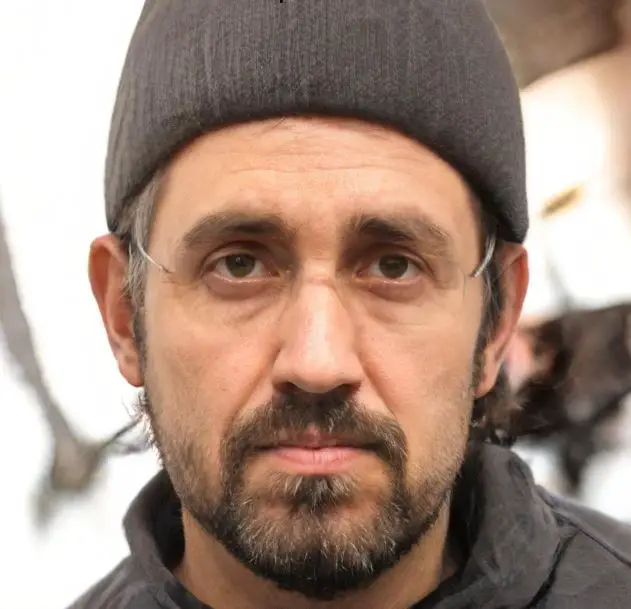
Hi, I’m TBone, a DJ with over 20 years of experience spinning tunes in clubs, on cruises, and at weddings. With a massive collection of vinyl and CDs, I always know the perfect tracks for any occasion and love sharing my passion for music through my website, Level Tunes.