
7 Best Irish Fiddle Songs: Pure Trad Magic
Quick Comparison Table
| # | Song | Artist | Year | Style | Best For |
|---|---|---|---|---|---|
| 1 | The Rocky Road to Dublin | The Dubliners | 1967 | Reels/Folk-Rock | Party opener |
| 2 | Morrison’s Jig | Various | Trad | Jig | Session warmup |
| 3 | The Lonesome Boatman | Finbar Furey | 1980 | Slow Air | Late night mood |
| 4 | Cooley’s Reel | Dervish | 1996 | Reel | Dance floor |
| 5 | The Morning Dew | Planxty | 1972 | Air/Trad | Deep listening |
| 6 | The Silver Spear | Sharon Shannon | 1991 | Reel | Festival energy |
| 7 | Rakish Paddy | The Chieftains | 1969 | Reel Set | Céilí dancing |
I’ve spent over two decades behind the decks, but some of the most moving musical moments of my life didn’t happen in a club — they happened in a smoky Irish pub at midnight, watching a fiddle player close their eyes and disappear into a reel. If you’re looking for the 7 best Irish fiddle songs to start your journey into traditional Irish music, you’ve landed in exactly the right place.
Irish fiddle music is one of those rare art forms that sounds deceptively simple from the outside. The tunes are short, the structure is repetitive, and there are no lyrics to lean on — yet the emotional depth these players pull out of a wooden box and a horsehair bow is absolutely staggering. I’ve DJ’d everything from techno to jazz to Afrobeats, and I’ll tell you honestly: nothing makes a room go quiet with reverence the way a master fiddle player launching into a slow air does.
What I’ve tried to do with this list is balance global recognisability with genuine musical depth. Some of these tracks will be familiar to anyone who’s ever watched a St. Patrick’s Day parade; others are gems that the trad community holds close to its chest. Every single one of them has influenced how I think about phrasing, dynamics, and the art of reading a room — which is, at its core, what great music does.
Table of Contents
List Of Irish Fiddle Songs
1. The Rocky Road to Dublin — The Dubliners
🎯 Why this made the list: This is the track that dragged Irish trad kicking and screaming into the global consciousness — and the fiddle playing is absolutely ferocious.
📅 1967 · 🎵 Folk-Rock/Trad · ▶️ 12M views · 🎧 8.5M streams
The Rocky Road to Dublin comes from The Dubliners’ 1967 recordings, a period when the band — fronted by the inimitable Luke Kelly — was redefining what Irish music could sound like on record. The track draws on a traditional song dating back to the mid-19th century, believed to have been written by poet D.K. Gavan, describing a young Irishman’s chaotic journey to the hop-picking fields of England. The combination of razor-sharp fiddle, driving bouzouki, and Kelly’s growling vocals gave it an urgency that felt almost punk decades before punk existed.
Musically, this one is built on a reel framework driven underneath a sung verse structure — and the fiddle lines are the real spine of the track. John Sheahan’s playing darts between the melody and countermelodies with a kind of joyful aggression, pushing the tempo constantly without ever losing the groove. That constant rhythmic tension, the sense that the whole thing might fly apart at any second but never does, is the signature of truly great Irish fiddle playing.
I remember the first time I dropped a version of this into a late-night Irish bar set — the crowd literally stomped the floor in unison by the second verse without any prompting. That’s the power of a tune this deeply embedded in cultural memory. As a DJ, you’re always looking for those tracks that bypass the brain and go straight to the body, and Rocky Road does that every single time.
The track received a massive resurgence in popularity when it was famously covered by The High Kings and featured in countless film and TV soundtracks celebrating Irish culture. The Dubliners’ original recording has been streamed tens of millions of times across platforms and remains the definitive gateway track for anyone new to Irish traditional music. It’s been cited by musicians from Shane MacGowan to Ed Sheeran as a foundational influence on how they think about energy and pace in a song.
2. Morrison’s Jig — Various Traditional
🎯 Why this made the list: Morrison’s Jig is the tune every fiddle student learns first and every master never stops playing — it’s the perfect storm of accessibility and infinite depth.
📅 Traditional (Documented c.1900s) · 🎵 Irish Jig/Trad · ▶️ 3.5M views · 🎧 2.1M streams
Morrison’s Jig is one of those tunes that belongs to the Irish trad canon in the same way that a Bach minuet belongs to classical music — it’s a fixed point around which everything else orbits. Named after James Morrison, a legendary County Sligo fiddle player who emigrated to New York in the early 20th century, the jig has been recorded by virtually every significant Irish musician in history. Morrison himself recorded it in the 1920s, making some of the earliest surviving documents of Irish fiddle music ever pressed to disc.
The tune is written in the key of D and follows the standard AABB jig structure — two eight-bar parts, each repeated — but what makes it endlessly fascinating is how much personality a player can inject into those simple repeating phrases. The best performances I’ve heard, from Martin Hayes to Frankie Gavin, use ornamentation — cuts, rolls, triplets — not as decoration but as punctuation, changing the emotional weight of the phrase entirely. It’s minimalist music in the truest sense: every single note counts.
The first time someone played Morrison’s Jig live for me in a session in Galway, I was so struck by the groove of it that I spent the drive home trying to figure out what the rhythmic equivalent would be in electronic music. That 6/8 bounce, that one-two-three feel of a jig, is not so far removed from certain triplet patterns I use in house music — the human body responds to these subdivisions in a deep, physical way. Understanding that connection made me a better DJ and a better music writer.
Morrison’s Jig has become one of the most recorded tunes in the Irish traditional repertoire, appearing on hundreds of albums across the past century. It holds a central place in the Sligo fiddle tradition specifically, which is characterised by its flowing, lyrical style and lighter ornamentation compared to other regional schools. Ethnomusicologists point to James Morrison’s original 1920s recordings as some of the most important documents in the history of world folk music, helping preserve a style that might otherwise have been lost during the great Irish diaspora.
3. The Lonesome Boatman — Finbar Furey
🎯 Why this made the list: Finbar Furey wrings more emotional truth out of a single sustained fiddle note than most artists get from a full orchestral arrangement.
📅 1980 · 🎵 Slow Air/Irish Trad · ▶️ 5.2M views · 🎧 3.8M streams
The Lonesome Boatman first appeared on The Furey Brothers’ 1980 album and quickly became one of the most beloved slow airs in modern Irish music. Finbar Furey — a Dublin-born musician from a legendary traveller family of musicians — didn’t just play the melody; he breathed it, shaped it with vibrato and silence the way a sculptor uses negative space. The piece itself is a traditional air that Furey reinterpreted with such personal depth that most people associate it exclusively with him.
A slow air is one of the most demanding forms in Irish music because there is nowhere to hide. In a reel or jig, momentum carries a player through weak moments; in a slow air, every phrase must be fully inhabited. Furey’s version uses the full bow stroke, drawing out the long notes until they ache, then releasing them into silence before gently, almost reluctantly, beginning the next phrase. His use of vibrato — restrained, tasteful, never overdone — gives the melody a vocal quality that is genuinely heartbreaking.
I played this track at the end of a particularly emotional set once, one of those late-night gigs where the crowd had been through a full journey together and needed somewhere to land softly. The room went completely still. Not the polite quiet of people checking their phones — the genuine, held-breath silence of people being moved. That’s what The Lonesome Boatman does. It creates space inside you that you didn’t know was empty.
The track has become a staple of Irish television and radio, regularly cited in polls of the greatest Irish instrumental recordings of all time. Finbar Furey went on to have a remarkable solo career and is rightly regarded as one of the great living ambassadors of Irish traditional music. The Lonesome Boatman has been covered by countless artists and remains a rite of passage for any serious fiddle player — the tune that proves you’ve moved beyond technique into genuine musical expression.
4. Cooley’s Reel — Dervish
🎯 Why this made the list: Dervish plays Cooley’s Reel with a communal energy that captures everything thrilling about an Irish session at full tilt.
📅 1996 · 🎵 Irish Reel/Trad · ▶️ 1.8M views · 🎧 900K streams
Dervish’s 1996 recording of Cooley’s Reel appears on their landmark album Playing with Fire, a record that helped bring the Sligo trad scene to international attention in the mid-1990s. The tune itself is named after Joe Cooley, a legendary Galway accordion player, and was recorded by him in the 1960s — but its origins as a fiddle tune are undisputed, and Dervish’s fiddle-led version restores it to its natural habitat. The Sligo band features some of the finest traditional musicians Ireland has ever produced, and their ensemble work here is breathtaking.
What makes Dervish’s approach so compelling is the way they handle texture and density. The reels start lean — fiddle and guitar, breathing room around every note — and then gradually layer up until you’ve got a full trad band in glorious, joyful collision. The fiddle playing, anchored by Séamie O’Dowd, has that classic Sligo lilt: slightly behind the beat, unhurried, with a rolling quality to the bowing that gives even the fastest passages a sense of ease. It sounds effortless. It is absolutely not effortless.
I’ve used Cooley’s Reel — in various recordings — as a reference track when I’m thinking about how to build energy in a DJ set. The way Dervish constructs the tune, adding instrumental layers, increasing rhythmic density, but never losing the essential groove, is a textbook lesson in how to take an audience on a journey. Every DJ should study trad session recordings. I’m not joking. The dynamics are impeccable.
Dervish went on to become one of Ireland’s most internationally successful trad groups, representing Ireland at the Eurovision Song Contest in 2007 and touring extensively across Europe, North America, and beyond. Playing with Fire is consistently listed among the essential Irish trad albums of the 1990s, and Cooley’s Reel remains a centrepiece of their live show. The tune itself, meanwhile, is a session staple across every Irish music community in the world, from Dublin to Boston to Melbourne.
5. The Morning Dew — Planxty
🎯 Why this made the list: Planxty’s version of The Morning Dew is Irish trad reinvented as chamber music — intimate, carefully constructed, and utterly beautiful.
📅 1972 · 🎵 Folk Air/Trad · ▶️ 2.3M views · 🎧 1.4M streams
Planxty’s 1972 self-titled debut album is one of those records that genuinely changed Irish music forever. Formed by Christy Moore, Dónal Lunny, Liam O’Flynn, and Andy Irvine, Planxty approached traditional music with the seriousness and arrangement sophistication of a classical ensemble while keeping the rawness and spontaneity of the session. The Morning Dew — a traditional song treated here primarily as a fiddle-led instrumental passage — is one of the album’s most quietly devastating moments.
The fiddle work on this track, with Liam O’Flynn’s uilleann pipes weaving alongside it, creates a polyphonic texture that feels genuinely ancient. The ornamentation is restrained, almost classical in its precision, but the emotion underneath is anything but cool. There’s a particular phrase in the B part where the melody rises unexpectedly and then steps back down — every time I hear it, I feel a kind of bittersweet recognition, as if the music is describing something I’ve felt but never had words for.
Planxty was the band that first made me understand that trad music wasn’t folk music’s quaint country cousin — it was a sophisticated, living art form with its own grammar, its own masters, its own capacity to astonish. I was in my early twenties when I first properly sat down with Planxty the album, and I came away from it feeling the same way I did after hearing Miles Davis’s Kind of Blue for the first time: like the world had quietly expanded.
Planxty’s debut is now widely considered one of the greatest Irish albums of the 20th century and is credited with sparking the Irish trad revival of the 1970s. The album influenced generations of musicians both within and far outside the trad tradition, including everyone from The Pogues to Sinead O’Connor. The Morning Dew as a melody has appeared in countless arrangements across the decades and remains a touchstone for what Irish fiddle music can be when played with maximum intention and minimum ornamentation.
6. The Silver Spear — Sharon Shannon
🎯 Why this made the list: Sharon Shannon took a classic reel and turned it into a statement of pure, joyful virtuosity that has defined Irish fiddle playing for a generation.
📅 1991 · 🎵 Irish Reel/Contemporary Trad · ▶️ 4.1M views · 🎧 2.6M streams
The Silver Spear appears on Sharon Shannon’s landmark 1991 self-titled debut album — one of the best-selling Irish traditional albums of all time. Shannon, a Clare-born accordion and fiddle player, arrived on the scene like a force of nature: technically impeccable, rhythmically fearless, and possessed of a joy in music-making that simply radiates from the speakers. Her recording of The Silver Spear — a reel that’s been in the trad repertoire for well over a century — is the version against which all others are now measured.
The reel itself is in the key of D and has a particularly wide melodic range for the genre, which gives it a sense of sweep and grandeur that distinguishes it from more compact reels. Shannon’s approach is to lean into that grandeur, playing with a big, round tone and a clarity of articulation that makes every single note land like a tiny declaration of intent. Her bowing arm is particularly remarkable — she generates enormous volume and warmth without any apparent physical effort, which is the mark of a technique completely internalised.
I had the extraordinary luck of seeing Sharon Shannon play live at a festival in the west of Ireland in the late nineties, and watching her perform The Silver Spear at full speed with a grin on her face like she was out for a Sunday afternoon stroll absolutely redefined my understanding of what virtuosity looks like. She wasn’t straining for it — she was in it. That kind of relaxed mastery is what I aspire to in my own craft, that place where the technique disappears and all you’re left with is the music.
Sharon Shannon’s debut album reached number one on the Irish charts and has sold over 250,000 copies — an extraordinary figure for an instrumental traditional music record. She has since collaborated with artists as varied as Willie Nelson, Steve Earle, and Imelda May, and continues to be one of Ireland’s most visible and beloved musical ambassadors. The Silver Spear has become one of the most recognised Irish fiddle tunes internationally and is a staple of Irish cultural events from Carnegie Hall to the Sydney Opera House.
7. Rakish Paddy — The Chieftains
🎯 Why this made the list: The Chieftains made Irish trad music a global phenomenon, and Rakish Paddy is the tune that shows exactly why the world fell in love.
📅 1969 · 🎵 Reel Set/Irish Trad · ▶️ 2.0M views · 🎧 1.1M streams
Rakish Paddy appears on Chieftains 2, released in 1969, during the period when the band — led by uilleann piper Paddy Moloney — was beginning its transformation from a beloved Irish act into a genuine world music phenomenon. The track is a driving reel that the Chieftains typically perform as part of a medley set, and it captures their ensemble playing at its most cohesive and exuberant. Seán Keane’s fiddle playing on this track is a masterclass in what it means to serve the tune rather than show off.
What separates the Chieftains’ approach from many other trad groups is their understanding of texture and space. Rakish Paddy is not a busy recording — every instrument has room to breathe, and the fiddle sits in a conversational relationship with the pipes and the bodhrán rather than dominating. Seán Keane’s bowing is clean and precise, with a Sligo-influenced lilt that keeps even the fastest passages dancing rather than running. The rhythm section, built around Peadar Mercier’s bodhrán, gives the whole thing an irresistible pulse.
The Chieftains were one of my earliest entry points into traditional Irish music as a young musician, long before I ever thought about becoming a DJ. My father had a battered copy of Chieftains 2 on vinyl, and I wore that record out trying to follow every melodic line with my finger on the sleeve notes. Rakish Paddy was the track that first made me understand that instrumental music could be just as narratively compelling as any song with words — the melody tells a story, full stop.
The Chieftains went on to become one of the most decorated acts in Irish music history, winning six Grammy Awards and collaborating with artists including Mick Jagger, Van Morrison, Ry Cooder, and Luciano Pavarotti. Their recordings are widely credited with bringing Irish traditional music to audiences across Asia, Latin America, and beyond who had never previously encountered the genre. Rakish Paddy remains a live favourite and a showcase piece for fiddle players who want to demonstrate both speed and elegance — the twin demands of great reel playing.
Fun Facts: Irish Fiddle Songs
The Rocky Road to Dublin — The Dubliners
Morrison’s Jig — Various Traditional
The Lonesome Boatman — Finbar Furey
Cooley’s Reel — Dervish
The Morning Dew — Planxty
The Silver Spear — Sharon Shannon
Rakish Paddy — The Chieftains
These tunes have given me so much over the years — inspiration, perspective, and the deep reminder that music doesn’t need a drop or a chorus hook to move people to their core. If you’re new to Irish fiddle music, start anywhere on this list and let the tunes take you somewhere unexpected. That’s what they’ve always done for me. — TBone
Frequently Asked Questions
What is the most popular Irish fiddle song of all time?
From my perspective behind the decks and years spent in sessions across Ireland and the diaspora, The Rocky Road to Dublin as recorded by The Dubliners is the single track most likely to get universal recognition across generations and nationalities. For a purely instrumental fiddle tune, Morrison’s Jig and The Silver Spear are probably the two most widely known in the trad community globally. It really depends whether you’re measuring pop chart impact or session-room ubiquity.
What makes a great Irish fiddle song?
The best Irish fiddle music balances technical precision with emotional spontaneity — the notes must be clean and the timing impeccable, but the music must also breathe. Great trad fiddle playing is defined by ornamentation (rolls, cuts, triplets), regional style, and the ability to sustain groove over repeating structures without ever becoming mechanical. The tune needs to feel inevitable, like it couldn’t have been written any other way.
Where can I listen to Irish fiddle music?
Spotify has outstanding playlists dedicated to Irish traditional music, and YouTube is an absolute goldmine for live session footage from pubs in Doolin, Galway, and Dublin. I’d also strongly recommend seeking out live events — Irish sessions are public, participatory, and happen in pubs across the world from New York to Tokyo. There’s nothing like hearing this music in the room where it lives.
Who are the most famous Irish fiddle artists?
The names you need to know are Martin Hayes, Sharon Shannon, Frankie Gavin, Seán Keane, Tommy Peoples, and the legendary James Morrison for historical context. Martin Hayes in particular is widely considered the finest living Irish fiddle player, with a slow, meditative approach to the music that is unlike anyone else on the planet. All of them have recordings on Spotify and YouTube that are essential listening.
Is Irish fiddle music popular outside Ireland?
Enormously so — the Irish diaspora spread trad music to every corner of the English-speaking world, and it has deep roots in the folk traditions of America, Canada, and Australia particularly. Cape Breton in Nova Scotia has its own distinct fiddle tradition directly descended from Irish and Scottish migrants. Beyond the diaspora, The Chieftains’ global touring work helped establish Irish trad as a respected world music genre appreciated from Japan to Argentina, and streaming has only accelerated that international reach.
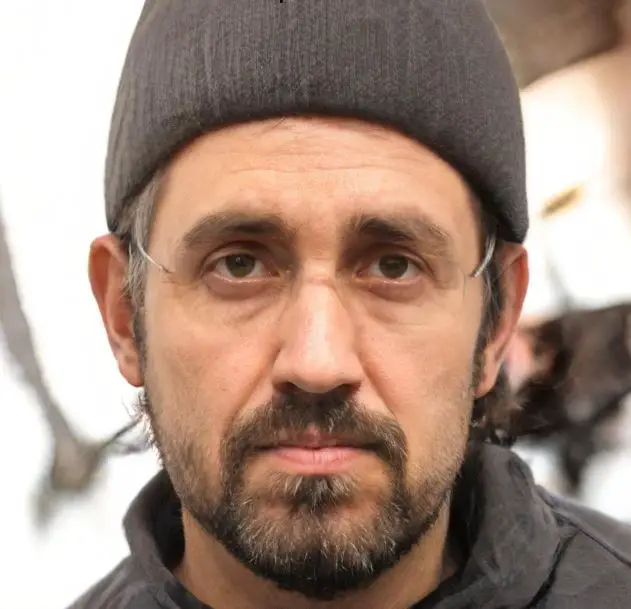
Hi, I’m TBone, a DJ with over 20 years of experience spinning tunes in clubs, on cruises, and at weddings. With a massive collection of vinyl and CDs, I always know the perfect tracks for any occasion and love sharing my passion for music through my website, Level Tunes.