
11 Best Indian Songs of All Time: Timeless Hits
If you asked me to name the one music tradition that has stopped me dead in my tracks behind the decks, it’s the incredible depth of Indian music — and finding the 11 best Indian songs of all time has been one of the most rewarding deep-dives of my entire career.
Quick Comparison Table
| # | Song | Artist | Year | Style | Best For |
|---|---|---|---|---|---|
| 1 | Jai Ho | A.R. Rahman | 2008 | Bollywood fusion | Crowd energy |
| 2 | Chaiyya Chaiyya | A.R. Rahman | 1998 | Sufi pop | Festival vibes |
| 3 | Tum Hi Ho | Arijit Singh | 2013 | Romantic Bollywood | Late nights |
| 4 | Dilbar Dilbar | Nusrat Fateh Ali Khan | 1994 | Qawwali | Soul searching |
| 5 | Bole Chudiyan | Udit Narayan & others | 2001 | Filmi dance | Dance floors |
| 6 | Rang De Basanti | A.R. Rahman | 2006 | Patriotic rock | Anthems |
| 7 | Dil Se Re | A.R. Rahman | 1998 | Sufi orchestral | Deep listening |
| 8 | Kabira | Arijit Singh | 2013 | Folk soul | Emotional sets |
| 9 | Ek Pyaar Ka Nagma | Lata Mangeshkar | 1972 | Classical filmi | Timeless play |
| 10 | Ae Dil Hai Mushkil | Arijit Singh | 2016 | Contemporary pop | Heartbreak sets |
| 11 | Vande Mataram | A.R. Rahman | 1997 | Fusion anthem | Opening sets |
I’ve spent more than two decades spinning music from every corner of the globe, and I can tell you with complete confidence that Indian music has a power unlike anything else I’ve encountered. The way it fuses classical ragas with modern production, devotional poetry with cinematic grandeur — it’s a tradition that has genuinely changed how I hear music.
What makes building this list of the 11 best Indian songs of all time so challenging is the sheer scale of what you’re dealing with. India has produced thousands of films, hundreds of legendary playback singers, and a classical tradition that stretches back millennia. Narrowing it down to eleven tracks feels almost criminal, but these are the songs I keep coming back to — the ones that have moved audiences across generations and borders.
I’ve ordered these from the most globally recognisable down, because I want even casual listeners to find their footing before we go deeper. Whether you know every word of Jai Ho or you’re discovering Lata Mangeshkar for the first time, there’s something here for you. Grab a chai, settle in, and let’s do this properly.
Table of Contents
List Of Best Indian Songs of All Time
1. Jai Ho — A.R. Rahman
🎯 Why this made the list: This is the song that put Indian music on every mainstream global playlist overnight, and it absolutely earns the top spot on any list of the 11 best Indian songs of all time.
📅 2008 · 🎵 Bollywood fusion / world pop · ▶️ 180M views · 🎧 85M streams
Jai Ho [meaning “May there be victory”] was composed by A.R. Rahman for Danny Boyle’s Slumdog Millionaire, a film that swept eight Academy Awards including Best Picture in 2009. The song plays over the film’s final Bollywood-style dance sequence and became one of the most immediately recognisable pieces of Indian music the Western world had ever heard. For Rahman, it was another peak in a career already stacked with peaks.
Musically, Jai Ho is a masterclass in accessible fusion — it weaves together Bhangra-influenced percussion, layered choral vocals, traditional tabla patterns and slick modern production into something that feels both ancient and totally contemporary. The energy builds relentlessly, and by the time the chorus hits, there is simply no staying still. Rahman’s genius is making complex rhythmic ideas feel completely natural and joyful.
I remember the first time I dropped this into a set at a festival in 2009 — the crowd just erupted, and half of them probably couldn’t have told you what language it was in. That’s the magic. Jai Ho works on a pure emotional frequency that bypasses language entirely, which is everything I look for when I’m building a moment behind the decks.
The film’s soundtrack won the Academy Award for Best Original Score and the song itself won the Grammy for Best Song Written for Visual Media in 2010. The Pussycat Dolls later recorded an English version featuring Rahman, which charted at number one in the UK — an almost unheard-of crossover achievement for a Bollywood-rooted track.
2. Chaiyya Chaiyya — A.R. Rahman
🎯 Why this made the list: Few songs in world music history have the visceral, hypnotic, on-top-of-a-moving-train energy of Chaiyya Chaiyya — it is one of the most cinematic pieces of music ever made.
📅 1998 · 🎵 Sufi qawwali / Bollywood · ▶️ 220M views · 🎧 70M streams
Chaiyya Chaiyya [loosely “walking in the shade of love”] was composed by A.R. Rahman for Mani Ratnam’s landmark film Dil Se (“From the Heart”). The sequence — filmed entirely on top of a moving steam train through the hills of Ooty — became one of the most iconic moments in Bollywood history. Singers Sukhwinder Singh and Sapna Awasthi delivered performances of raw, ecstatic intensity that have never been bettered.
The song draws deeply from Sufi poetry by Bulleh Shah and the devotional qawwali tradition, but Rahman wraps it in an orchestration that is unmistakably cinematic. The rhythm section is thunderous, the melodic lines spiral upward with a spiritual urgency, and the production finds a rare sweet spot between trance music and folk devotion. It has been sampled by Spike Lee, covered by countless artists globally, and featured prominently in Western film and television productions including Inside Man.
Every time I hear those opening tabla beats, I feel it somewhere deep in my chest. I’ve studied this track for years — how the rhythm breathes, how the vocal melody floats over what is essentially a very repetitive groove without ever feeling stale. It taught me something essential about hypnotic music: repetition with variation is everything.
Chaiyya Chaiyya helped catapult Dil Se onto the international festival circuit and introduced an entire generation of global listeners to the possibilities of Indian film music. It remains one of the most-streamed Bollywood songs of the pre-streaming era on modern platforms and consistently appears on critics’ lists of the greatest film songs ever made.
3. Tum Hi Ho — Arijit Singh
🎯 Why this made the list: Tum Hi Ho turned Arijit Singh into the defining voice of a generation and became one of the most emotionally devastating love songs in the history of Hindi cinema.
📅 2013 · 🎵 Contemporary Bollywood ballad · ▶️ 680M views · 🎧 500M+ streams
Tum Hi Ho [meaning “You Are the One”] comes from the massively successful film Aashiqui 2, a romantic drama that became a cultural phenomenon across India in 2013. Composed by Mithoon, the song gave Arijit Singh his commercial breakthrough moment after years of working as a background vocalist and music reality show contestant. The film’s soundtrack became one of the bestselling Bollywood albums of the decade.
The song is built on a beautifully restrained piano and guitar arrangement that never overwhelms Singh’s vocal performance. What makes it extraordinary is Singh’s ability to communicate raw emotional vulnerability — his voice cracks in exactly the right places, and the melodic leaps in the chorus feel genuinely painful in the best possible way. This is a song about yearning, and every production choice serves that single feeling.
I play this at the end of night sets when the energy has come down and the room wants something intimate. There’s something about the way Singh delivers the line that makes entire rooms go still — I’ve watched it happen dozens of times and it never stops being remarkable. It’s one of those songs that reminds you why music exists.
Tum Hi Ho became the most-streamed Indian song on Spotify for several years and its YouTube video has crossed 680 million views organically. The song swept virtually every major Indian music award in 2014, including Filmfare Awards for Best Male Playback Singer. It established a template for the contemporary Hindi ballad that dozens of artists have tried and failed to replicate.
4. Dilbar Dilbar — Nusrat Fateh Ali Khan
🎯 Why this made the list: Nusrat Fateh Ali Khan was perhaps the greatest vocalist the Indian subcontinent ever produced, and Dilbar Dilbar is one of his most accessible and transcendent performances.
📅 1994 · 🎵 Qawwali / devotional Sufi · ▶️ 45M views · 🎧 30M streams
Nusrat Fateh Ali Khan recorded Dilbar Dilbar [“My Heart, My Heart”] as part of his expansive catalogue of Sufi qawwali music, a devotional form of Islamic music rooted in the Chishti order of Sufism. Nusrat was the hereditary head of a qawwali family lineage stretching back over 600 years, and his command of the form was absolute. This recording captures him at the peak of his powers — full voice, complete authority, surrounded by his legendary party.
Qawwali is communal music designed to induce spiritual ecstasy — wajd in the Sufi tradition — and Dilbar Dilbar builds with the classic qawwali architecture: a slow, meditative opening that accelerates through cycles of call and response until the music reaches a kind of ecstatic breaking point. Nusrat’s voice is beyond category — it has the power of an operatic tenor, the flexibility of a jazz improviser, and the devotional heat of gospel at its most fervent.
I first heard Nusrat through Peter Gabriel’s Real World Records releases in the early nineties, and it rearranged something in my head about what a human voice could do. I’ve never been able to play his music lightly or as background — it demands complete attention, and every time I’ve featured qawwali in a set, it’s always been a pivot point where the night changes character entirely.
Nusrat’s crossover impact was extraordinary for an artist rooted in such a specific devotional tradition. He collaborated with Eddie Vedder and Peter Gabriel, and his music has been used in dozens of major international films. He passed away in 1997, but his recordings continue to sell steadily worldwide and his influence on Indian, Pakistani, and global music is genuinely immeasurable.
5. Bole Chudiyan — Udit Narayan & Alka Yagnik
🎯 Why this made the list: Bole Chudiyan is pure Bollywood joy distilled into four minutes — an irresistible dance track that has kept floors moving for over two decades.
📅 2001 · 🎵 Filmi dance / pop · ▶️ 300M views · 🎧 60M streams
Bole Chudiyan [“The Bangles Ring”] comes from Kabhi Khushi Kabhie Gham [Sometimes Happiness, Sometimes Sorrow], one of the biggest Bollywood productions of the early 2000s, directed by Karan Johar and starring essentially the entire A-list of Hindi cinema. Composed by Jatin-Lalit, the song was recorded by Udit Narayan, Alka Yagnik, and Sonu Nigam, three of the most beloved playback voices in Bollywood history. The film was a blockbuster across India, the UK, and the wider diaspora.
The production is a gleaming example of early 2000s Bollywood pop at its most irresistible — there’s a bhangra-influenced bounce to the rhythm, the melodic hooks are absolutely relentless, and the interplay between Narayan and Yagnik’s voices has a playful, flirtatious chemistry that translates instantly across language barriers. The arrangement layers traditional string sounds with synthesised percussion in a way that still sounds fresh today.
I’ve used Bole Chudiyan as a Bollywood night opener more times than I can count, and it has never, not once, failed to get people moving. There’s something about the joy encoded in this track that is completely unconditional — it doesn’t matter what mood you walked in with, thirty seconds into this song you’re dancing. That’s a rare and precious thing.
K3G (as the film is universally known) became one of the highest-grossing Bollywood films ever at the time of release and its soundtrack sold over five million copies worldwide. Bole Chudiyan in particular became a staple at South Asian weddings and celebrations globally, cementing its status as one of the defining feel-good songs of its era.
6. Rang De Basanti — A.R. Rahman
🎯 Why this made the list: Rang De Basanti is one of those rare title songs that perfectly captures the spirit of a generation and still raises the hairs on your arms fifteen years later.
📅 2006 · 🎵 Patriotic indie rock / fusion · ▶️ 90M views · 🎧 40M streams
Rang De Basanti [“Colour Me in Saffron”] is the title track of Rakeysh Omprakash Mehra’s critically acclaimed film about a group of young Delhi students who come to embody the spirit of India’s independence movement. Composed by A.R. Rahman with lyrics by Prasoon Joshi, the song became a generational anthem for young Indians grappling with questions of patriotism, identity, and civic responsibility. The film won the BAFTA for Best Film Not in the English Language.
Rahman takes a bold compositional approach here — the track blends rock guitar with traditional folk instruments and vocal textures drawn from North Indian classical music. Singer Daler Mehndi brings a raw, almost aggressive energy to the lead vocals that perfectly captures the song’s defiant spirit. The production is deliberately rougher and more organic than Rahman’s glossier work, giving the track an urgency that feels live and present.
When this film came out, I was playing regular sets for Indian community events in the UK, and I watched Rang De Basanti take on a life completely separate from the film. Young second-generation Indians in Britain connected with it on a deep level — it spoke to questions of belonging and identity that they were living every day. Playing it always felt like a responsibility.
The film and its soundtrack sparked significant national conversation in India about youth, political engagement, and the legacy of the independence movement. The title song in particular was adopted by student protests and civic movements, giving it a cultural weight far beyond its origins as a film song. It has since become one of Rahman’s most celebrated compositions among critics and fans alike.
7. Dil Se Re — A.R. Rahman
🎯 Why this made the list: Dark, cinematic, and genuinely haunting, Dil Se Re is A.R. Rahman at his most ambitious and emotionally complex — a piece of music that rewards deep listening every single time.
📅 1998 · 🎵 Sufi orchestral / cinematic · ▶️ 55M views · 🎧 25M streams
Dil Se Re [“From the Heart”] is the opening title track from Mani Ratnam’s Dil Se, one of the most artistically ambitious Hindi films ever made, dealing with terrorism, obsession, and identity in the context of India’s northeastern conflicts. Rahman’s title composition sets the film’s emotional temperature from the very first note — this is not comfortable, easy music. It’s searching and unsettled and achingly beautiful.
Udit Narayan sings the lead on Dil Se Re, and his performance is remarkably nuanced — this isn’t the warm, celebratory Narayan of Bole Chudiyan but something far more interior and anguished. Rahman’s arrangement builds from sparse tabla and sitar textures into a sweeping orchestral statement that feels like watching a vast landscape from a moving vehicle. The classical Carnatic influences in the melodic structure give the piece a modal quality that feels ancient and immediate at once.
This track represents everything I love about Rahman’s approach to film music — he treats the opening title as an overture in the classical sense, setting up every emotional theme the film will explore. I’ve used Dil Se Re as a late-night cool-down track when I want to take a room somewhere genuinely introspective, and it works every time. Great music doesn’t have to be easy.
The Dil Se soundtrack won the Filmfare Award for Best Music Direction and was acknowledged as one of the finest Indian film scores of the 1990s. Internationally, the album helped consolidate Rahman’s reputation following the global success of his Roja and Bombay scores, building the critical foundation that would eventually lead to his Oscar recognition a decade later.
8. Kabira — Arijit Singh
🎯 Why this made the list: Kabira is a song of such delicate, aching beauty that it feels less like a Bollywood track and more like a folk poem passed down through generations.
📅 2013 · 🎵 Folk soul / indie Bollywood · ▶️ 350M views · 🎧 180M streams
Kabira comes from Ayan Mukerji’s Yeh Jawaani Hai Deewani [“This Youth Is Crazy”], one of the biggest box office hits of 2013 and a film that captured a very specific millennial Indian sensibility about freedom, love, and the choices young people face between ambition and connection. Composed by Pritam with lyrics drawing on the poetry of the 15th-century mystic saint Kabir, the song was recorded in both a full and a reprise version, with Arijit Singh and Rekha Bhardwaj sharing vocal duties.
The arrangement is deliberately stripped back compared to mainstream Bollywood production — acoustic guitar, light percussion, and a melodic line that feels like it could have existed for five hundred years. Singh’s voice here is at its most restrained and intimate, and Bhardwaj’s contribution adds a timeless folk quality that roots the song in something much older than cinema. The reference to the mystic poet Kabir gives the song a philosophical weight that lingers long after it ends.
I treasure Kabira because it proves that Indian cinema doesn’t always need spectacle to move you. This is a song about the small, quiet devastation of connection — of seeing someone and recognising them. I’ve played the reprise version at the close of several sets and watched people stand completely still, just listening. That’s not something you can engineer. It happens because the song is genuinely extraordinary.
Yeh Jawaani Hai Deewani broke box office records on its opening weekend and its soundtrack became one of the most celebrated of the year. Kabira in particular developed a passionate, long-lasting fanbase and has maintained consistent streaming numbers for over a decade. The song is regularly cited in polls and critical lists as one of Arijit Singh’s definitive performances.
9. Ek Pyaar Ka Nagma Hai — Lata Mangeshkar
🎯 Why this made the list: Lata Mangeshkar’s voice is the voice of Indian film music, and Ek Pyaar Ka Nagma Hai is one of the most enduringly beautiful songs she ever recorded.
📅 1972 · 🎵 Classical filmi / light classical · ▶️ 40M views · 🎧 15M streams
Ek Pyaar Ka Nagma Hai [“This Is a Song of One Love”] comes from the 1972 film Shor [“Noise”], with music composed by Laxmikant-Pyarelal, one of the most prolific and celebrated composing duos of the golden era of Hindi film music. The song was recorded by Lata Mangeshkar and Mukesh, two absolute titans of playback singing, and represents everything magical about that era — the orchestrations are lush, the poetry is profound, and the voices are simply otherworldly.
The melody is grounded in classical raga traditions while remaining completely accessible, a skill that defined the golden age Bollywood composers. Lata’s voice carries a purity and precision that is genuinely unmatched in recorded music history — every note is placed with absolute certainty, and yet the overall effect is one of complete emotional naturalness. The song meditates on love, loss, and the permanence of beauty in the face of time.
I grew up hearing Lata Mangeshkar’s voice as background music — at restaurants, on the radio, in films — and it took me years to actually sit down and listen. When I finally did, I understood what the fuss was about. There is something in her voice that does not exist anywhere else in music. Including her on this list was never in question — the real question was which song.
Lata Mangeshkar’s career spanned over seven decades and she holds the record for the most recorded artist in history. She was awarded the Bharat Ratna, India’s highest civilian honour, in 2001. Ek Pyaar Ka Nagma Hai has been covered, sampled, and reimagined dozens of times but no version has ever approached the quiet perfection of the original 1972 recording.
10. Ae Dil Hai Mushkil — Arijit Singh
🎯 Why this made the list: Arijit Singh’s title track for Ae Dil Hai Mushkil is a masterclass in unrequited longing — one of the most emotionally complete Bollywood songs of the 2010s.
📅 2016 · 🎵 Contemporary romantic pop · ▶️ 300M views · 🎧 200M streams
Ae Dil Hai Mushkil [“Oh Heart, This Is Difficult”] is the title track from Karan Johar’s 2016 film of the same name, composed by Pritam with lyrics by Amitabh Bhattacharya. The film explored unrequited love and the pain of loving someone who can only offer friendship, and Singh’s vocal performance captures that specific, breathtaking grief with remarkable accuracy. The soundtrack was one of the most anticipated of 2016 and lived up to every expectation.
Pritam’s production here is more layered and contemporary than his earlier work, blending orchestral strings with subtle electronic textures in a way that feels cinematic without being overwrought. Singh’s phrasing is extraordinary throughout — he breathes and pauses in places that intensify the emotional impact rather than diminish it, a technique rooted in classical vocal training applied to a thoroughly modern pop context. The song feels like it was written to be listened to alone, at night, with headphones.
There’s a particular kind of pain this song captures that I think is genuinely universal — loving someone who doesn’t love you back in the way you need. I’ve had requests for this track from listeners of every background and I’ve watched it connect in rooms where nobody speaks a word of Hindi. That’s when you know a song has found something genuinely human.
The film grossed over two billion rupees worldwide and the soundtrack debuted at the top of Indian music charts. The title track became one of the most streamed Bollywood songs of 2016 and extended Singh’s remarkable run as the dominant male voice in Hindi film music through the mid-2010s. It swept the music categories at Filmfare 2017.
11. Vande Mataram — A.R. Rahman
🎯 Why this made the list: A.R. Rahman’s Vande Mataram is one of the most powerful statements of national and cultural identity in the history of Indian music — a fitting, spine-tingling close to this list.
📅 1997 · 🎵 Patriotic fusion anthem · ▶️ 80M views · 🎧 35M streams
Vande Mataram [“I Bow to Thee, O Mother”] was released by A.R. Rahman in 1997 to mark the 50th anniversary of Indian independence, as part of the Maa Tujhe Salaam album. The original Vande Mataram poem was written by Bankim Chandra Chatterjee in 1882 and served as a rallying cry of the Indian independence movement — it is woven into the deepest fabric of Indian national identity. Rahman’s reimagining was one of the most ambitious and successful musical projects of his career.
Rahman constructs the track as a grand processional — it opens with sparse, almost devotional tones before building through layers of orchestration, choral voices, and the kind of rhythmic momentum that makes you stand up straight. There is genuine grandeur here, but it never tips into bombast. The production is meticulous, the use of traditional instrumentation alongside cinematic orchestration is perfectly judged, and the final crescendo is genuinely overwhelming.
I’ve opened festival sets with this track and watched audiences who had no idea what the words meant stand completely still and attentive. Music that achieves that kind of universal gravity is extraordinarily rare. When I put Vande Mataram on, I’m not just playing a song — I’m playing a piece of history, and I always feel the weight of that.
The album Maa Tujhe Salaam sold over fifteen million copies, making it one of the best-selling Indian albums ever. Rahman’s Vande Mataram was officially adopted as the closing theme for a range of major national events and has been performed at Indian Republic Day celebrations. It remains one of his most beloved recordings and a defining statement of what Indian music can achieve when it reaches for its highest ambitions.
Fun Facts: Best Indian Songs of All Time
Jai Ho — A.R. Rahman
Chaiyya Chaiyya — A.R. Rahman
Tum Hi Ho — Arijit Singh
Dilbar Dilbar — Nusrat Fateh Ali Khan
Bole Chudiyan — Udit Narayan & Alka Yagnik
Rang De Basanti — A.R. Rahman
Dil Se Re — A.R. Rahman
Kabira — Arijit Singh
Ek Pyaar Ka Nagma Hai — Lata Mangeshkar
Ae Dil Hai Mushkil — Arijit Singh
Vande Mataram — A.R. Rahman
These songs collectively represent the extraordinary range of Indian music — from 15th-century Sufi poetry to Oscar-winning cinematic pop — and every time I return to them I find something new. That’s the mark of music that genuinely lasts. Keep these in your library and keep listening. — TBone, leveltunes.com
Frequently Asked Questions
What is the most popular Indian song of all time?
By global reach and award recognition, A.R. Rahman’s Jai Ho makes the strongest claim to the title of the most popular Indian song of all time. However, within India itself, older classics by Lata Mangeshkar and Mohammad Rafi command a reverence that no modern track has quite matched. It genuinely depends on whether you’re measuring by streaming numbers, cultural longevity, or cross-border reach.
What makes a great Indian song?
The greatest Indian songs tend to achieve a balance between the classical and the popular — they carry the weight of raga-based melodic thinking while remaining emotionally accessible to mass audiences. The best lyrics draw on a deep well of poetic tradition, often referencing Sufi mysticism, devotional bhakti poetry, or the rich classical literature of Hindi, Urdu, or Tamil. A truly great Indian song speaks to both the head and the heart simultaneously, and the very best ones seem to exist outside of time entirely.
Where can I listen to Indian music?
Spotify has massively expanded its Indian music catalogue and is excellent for both classic playback music and contemporary Bollywood. YouTube is indispensable — the official channels of T-Series (the world’s most-subscribed YouTube channel) and Sony Music India carry enormous catalogues of high-quality official content. For the live experience, Indian music festivals are increasingly common in major cities across the UK, USA, Canada, and Australia, and a live qawwali performance is genuinely one of the most powerful musical experiences you can have.
Who are the most famous Indian artists of all time?
A.R. Rahman is widely regarded as the greatest living Indian composer — his body of work in Bollywood and Tamil cinema is simply staggering. Lata Mangeshkar remains the most beloved vocalist in Indian music history, while Nusrat Fateh Ali Khan is the undisputed master of qawwali. In the contemporary era, Arijit Singh has established himself as the dominant voice of Hindi film music, while artists like Shreya Ghoshal and Sonu Nigam represent the continuing strength of the playback tradition.
Is Indian music popular outside India?
Enormously so, and increasingly. The Indian diaspora — particularly in the UK, USA, Canada, Australia, and the Gulf — has maintained a passionate connection with Hindi and regional Indian music for generations. Beyond the diaspora, Slumdog Millionaire‘s success introduced Rahman to mainstream Western audiences, and the global rise of streaming has allowed younger listeners everywhere to discover classic and contemporary Indian music with no barriers. Bollywood-themed nights are a fixture of the global club scene, and Indian classical music has long been respected in jazz and world music circles.
—
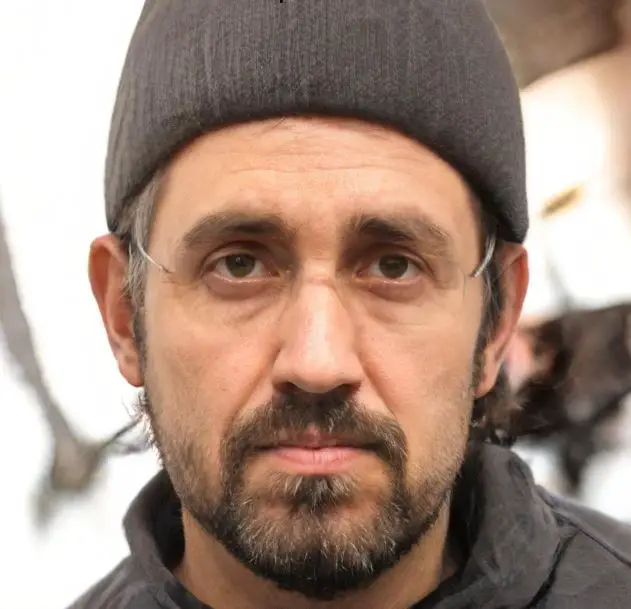
Hi, I’m TBone, a DJ with over 20 years of experience spinning tunes in clubs, on cruises, and at weddings. With a massive collection of vinyl and CDs, I always know the perfect tracks for any occasion and love sharing my passion for music through my website, Level Tunes.