
7 Best Indian Instrumental Songs: Pure Magic
Quick Comparison Table
| # | Song | Artist | Year | Style | Best For |
|---|---|---|---|---|---|
| 1 | Raga Bhairav | Ravi Shankar | 1956 | Classical | Morning listen |
| 2 | Chariots of Fire (Bombay Theme) | A.R. Rahman | 1995 | Fusion | Focus music |
| 3 | Taal Se Taal Mila (Instrumental) | A.R. Rahman | 1999 | Orchestral | Dance warmup |
| 4 | Nadaan Parindey (Guitar Version) | Mohit Chauhan / Amit Trivedi | 2011 | Indie Acoustic | Late night sets |
| 5 | Bombay Theme | A.R. Rahman | 1995 | Cinematic | Film lovers |
| 6 | Mishra Khamaj | Zakir Hussain | 1973 | Tabla fusion | Percussion fans |
| 7 | Pather Panchali Theme | Ravi Shankar | 1955 | Classical Film | Cinema buffs |
I’ve been spinning records and digging through crates for over two decades, and nothing stops a room cold like a perfectly placed Indian instrumental. The 7 best Indian instrumental songs I’ve gathered here represent the full sweep of what this music can do — from the pre-dawn stillness of a classical raga to the cinematic thunder of a Rahman orchestral score.
What makes Indian instrumental music so extraordinary is the conversation between silence and sound, between discipline and pure spontaneous feeling. Every note has a reason for being there. As a DJ who has closed sets in Mumbai, played ambient stages at UK festivals, and built playlists for meditation studios from Berlin to Bangkok, I can tell you that these tracks cross every cultural and genre boundary imaginable.
I want to be clear: this list isn’t ranked by chart numbers or Spotify algorithms. It’s ranked by global recognisability and the sheer weight of impact these recordings carry. These are the tracks I reach for when I need to prove to a skeptical crowd that Indian instrumental music is not just background wallpaper — it is some of the most sophisticated, emotionally devastating music on the planet.
Table of Contents
List Of Indian Instrumental Songs
1. Raga Bhairav — Ravi Shankar
🎯 Why this made the list: This is the recording that introduced the world to the sitar as a serious concert instrument, and it has never been equalled for pure meditative power.
📅 1956 · 🎵 Hindustani Classical · ▶️ 4.2M views · 🎧 1.8M streams
Raga Bhairav is one of Ravi Shankar’s earliest internationally released recordings, appearing on the landmark album Three Ragas on World Pacific Records. Recorded in the mid-1950s, at a time when the world outside India had barely heard of the sitar, this performance is a kind of cultural earthquake in slow motion. Shankar was in his early thirties, already a master, and the confidence in every phrase is unmistakable.
Bhairav is a morning raga, traditionally performed at dawn, and Shankar honours that tradition with an opening alap — the unmetered, melodic introduction — of extraordinary patience and beauty. The drone of the tanpura underneath creates a canvas of pure sound, and when the tabla eventually enters, the rhythmic dialogue between Shankar and his accompanist feels like two old friends finishing each other’s sentences. The microtonal ornaments Shankar employs here, the gamakas and meends, became the template for everything Western listeners later heard as “Indian music.”
I first encountered this recording through a mentor of mine, an old-school DJ named Priya who used to play ambient sets in Goa in the late nineties. She put this on at sunrise on a beach in Anjuna and I genuinely didn’t speak for forty minutes. That kind of silence is the highest compliment you can pay a piece of music, and I’ve been chasing that moment ever since every time I queue this track up.
The cultural impact of Ravi Shankar’s sitar recordings, and this one in particular, is incalculable. George Harrison credited Shankar directly as his greatest musical influence, and the entire psychedelic era of Western rock — from the Beatles’ Within You Without You to the Rolling Stones’ Paint It Black — flows directly from moments like this. Shankar eventually won three Grammy Awards and became the first Indian musician to perform at Woodstock. This track is where it all starts.
2. Bombay Theme — A.R. Rahman
🎯 Why this made the list: A.R. Rahman compressed the entire emotional landscape of a city of twenty million people into four minutes of orchestral perfection.
📅 1995 · 🎵 Cinematic Orchestral Fusion · ▶️ 18.4M views · 🎧 6.2M streams
The Bombay soundtrack was composed by A.R. Rahman for Mani Ratnam’s landmark 1995 film of the same name, a love story set against the backdrop of the 1992–1993 Bombay riots. The Bombay Theme — the main instrumental motif that opens and threads through the film — is arguably the most recognisable piece of Indian cinematic instrumental music ever written. Rahman was just five years into his film career at this point, and he was already operating on a completely different level from everyone around him.
What makes this theme so extraordinary is its harmonic language. Rahman blends the bansuri (bamboo flute), strings, and a subtle electronic pulse in a way that shouldn’t work by any conventional rule but feels completely inevitable. The melody has a circularity to it — it keeps returning to its root note with the gentleness of a tide — that mirrors the film’s central theme of love persisting through chaos. The orchestration is lush without being overwrought, emotional without being manipulative.
As a DJ, I’ve used the Bombay Theme as an intro piece more times than I can count. There’s something about that opening flute phrase that quiets a room instantly, regardless of what country you’re in or what the crowd has been listening to for the previous three hours. I played it to close out a sunrise set at a festival in Amsterdam once, and a woman in the front row just started crying. She’d never heard it before. That’s the power of Rahman’s melodic genius.
The Bombay soundtrack won the National Film Award for Best Music Direction in India and brought Rahman his first major international attention. The film itself was screened at festivals worldwide, and the theme became an entry point for an entire generation of non-Indian listeners discovering Bollywood music for the first time. Time magazine later named Rahman one of the 100 most influential people in the world, and moments like the Bombay Theme are exactly why.
3. Taal Se Taal Mila Instrumental — A.R. Rahman
🎯 Why this made the list: Rahman strips away the vocals and lets the percussion and melody do the emotional heavy lifting with devastating results.
📅 1999 · 🎵 Rhythmic Orchestral · ▶️ 9.7M views · 🎧 3.1M streams
The 1999 film Taal, directed by Subhash Ghai, was a massive commercial and critical success, and its soundtrack became one of the biggest-selling Indian film albums of the decade. The instrumental version of Taal Se Taal Mila — translated roughly as “rhythm meeting rhythm” — strips away Alka Yagnik and Udit Narayan’s celebrated vocal performance and reveals the extraordinary rhythmic and melodic architecture underneath. Rahman built this song from the ground up as a rhythmic showcase, and it shows.
The instrumental version foregrounds the tabla work and the orchestral arrangement in a way the vocal version doesn’t fully allow. You can hear the interplay between the percussion section and the string arrangement with perfect clarity, and Rahman’s use of South Indian classical rhythmic cycles (talas) underneath a very accessible melodic line is a masterclass in making complex music feel effortless. The transition from the slow, stately verse section to the explosive chorus is one of the great dynamic moments in Indian film music history.
I’ve used this track in DJ sets as a palate cleanser between heavier electronic music and world music, and it works every single time. The rhythmic energy is high enough to keep a floor engaged, but the melodic beauty gives people permission to just close their eyes and feel it rather than dance. That dual function — body music and soul music at the same time — is incredibly rare and incredibly valuable when you’re reading a room.
Taal was the first Bollywood film to enter the US box office top ten in its opening weekend, a historic moment for Indian cinema’s international ambitions. The soundtrack sold over two million physical copies in India alone and was nominated for numerous Filmfare Awards. Rahman’s work on Taal is widely credited with beginning the globalisation of Bollywood music in earnest.
4. Nadaan Parindey Guitar Version — Amit Trivedi
🎯 Why this made the list: This acoustic reimagining of one of indie Bollywood’s greatest songs reveals an emotional depth that the original, brilliant as it is, only hints at.
📅 2011 · 🎵 Indie Acoustic · ▶️ 5.3M views · 🎧 2.4M streams
Rockstar, Imtiaz Ali’s 2011 film about a musician’s rise and disintegration, featured one of the most celebrated Bollywood soundtracks in recent memory, with A.R. Rahman composing the main score. But it was Amit Trivedi’s acoustic guitar arrangement of Nadaan Parindey — “naive bird,” a song about innocence lost — that became a cult favourite among India’s indie music community. Trivedi, who had already made his name with the Dev.D soundtrack, approached this arrangement as a meditation rather than a performance piece.
The guitar version removes the orchestral sweep of the original and replaces it with something much more intimate and raw. Trivedi’s fingerpicking style draws on both Western folk guitar and the melodic contours of Hindustani classical music, creating a sound that feels genuinely unique rather than like a compromise between two traditions. The melody, which in the original has a soaring, cinematic quality, becomes something much more vulnerable and human when reduced to a single acoustic guitar.
I found this recording through an Indian music blogger I used to collaborate with on a world music podcast, and it stopped me completely when I first heard it. I was in the middle of building a chill-out playlist for a rooftop bar in East London, and I realised I’d been sitting completely still for the entire four-minute duration with my headphones on. I put it in the set that night and several people came up afterwards asking what the “guitar thing” was. That’s exactly the reaction you want.
The Rockstar soundtrack and its various acoustic and alternate versions became a defining moment for the indie Bollywood movement, proving that audiences were hungry for more introspective, less commercially polished music from Indian cinema. Amit Trivedi went on to win multiple National Film Awards and Filmfare Awards for his work, and his willingness to explore intimate instrumental arrangements helped open the door for a new generation of Indian singer-songwriters and composers.
5. Mishra Khamaj — Zakir Hussain
🎯 Why this made the list: Zakir Hussain makes the tabla sing like a human voice on this recording, and it remains the definitive showcase of Indian percussion as a solo art form.
📅 1973 · 🎵 Hindustani Classical Percussion · ▶️ 3.8M views · 🎧 0.9M streams
Ustad Zakir Hussain is widely regarded as the greatest tabla player in the history of the instrument, and Mishra Khamaj — “mixed Khamaj,” referring to the raga framework in which the tabla improvisation is set — is one of his earliest and most celebrated solo recordings. Recorded when Hussain was just twenty-three years old, the performance reveals a technical command and musical imagination that even then was simply without equal. His father, Ustad Alla Rakha, had been the legendary tabla accompanist to Ravi Shankar, and Zakir inherited both his father’s technique and his deep understanding of melodic improvisation.
What makes Mishra Khamaj so remarkable as a listening experience is the way Hussain makes the tabla function as a melodic instrument, not just a rhythmic one. Through precise control of tension, pitch, and timbre, he creates the impression of a conversation, a question-and-answer dialogue with himself. The bayan (bass drum) and dayan (treble drum) of the tabla pair become two distinct voices, and the interplay between them has all the emotional complexity of a classical raga performance on a melodic instrument. It is percussion as poetry.
I’ve been a percussion nerd since the early days of my DJing career — I always say that rhythm is the skeleton and melody is the flesh — and Zakir Hussain’s tabla playing is the reason I started spending serious time studying Indian music theory. I used to loop a section of Mishra Khamaj during my mixing practice sessions just to calibrate my sense of rhythm, because the complexity of what Hussain does in a single sixteen-beat cycle is humbling. It recalibrates your entire relationship with time.
Zakir Hussain became a global ambassador for Indian classical music through his work with fusion groups like Shakti — his collaboration with guitarist John McLaughlin — and later with the supergroup Masters of Percussion. He won a Grammy Award in 1992 for his collaboration with Mickey Hart on Planet Drum and received India’s highest civilian honour, the Padma Bhushan, in 2002. But solo recordings like Mishra Khamaj remain the purest expression of his extraordinary gift.
6. Pather Panchali Theme — Ravi Shankar
🎯 Why this made the list: This is the score that taught the world cinema how to use Indian classical music as a dramatic and emotional language in film.
📅 1955 · 🎵 Classical Film Score · ▶️ 2.9M views · 🎧 0.7M streams
Satyajit Ray’s debut film Pather Panchali [Song of the Little Road] is considered one of the greatest films ever made — it appears on virtually every serious list of world cinema masterpieces. Ravi Shankar composed the score when he was himself just beginning to gain wider recognition, and the two artists’ collaboration produced something that transcended both of their individual careers at that point. The main theme, built around the sarod and sitar with sparse percussion, is a piece of music that manages to sound simultaneously ancient and heartbreaking fresh.
Shankar’s approach to film scoring here was revolutionary for its time. Rather than using music to underline or explain the emotions on screen — the Hollywood approach of the era — he composed music that ran alongside the images, creating a parallel emotional experience. The theme is melancholic without being sentimental, simple in its melodic outline but infinitely nuanced in its ornamentation. It has the quality of folk music elevated to high art, which mirrors the film’s own aesthetic project perfectly.
The first time I screened Pather Panchali — at a film night a friend organised in a warehouse in Hackney about fifteen years ago — I was completely undone by the combination of Ray’s images and Shankar’s music. I’d been spinning Indian-influenced ambient music for years by that point, but this was something different. This was music that understood tragedy without dramatising it, and as a DJ and music lover that distinction matters enormously to me. It changed how I think about space and restraint in music.
Pather Panchali won the Best Human Document award at the 1956 Cannes Film Festival and launched both Ray’s and Shankar’s international careers in a decisive way. The film is now preserved in institutions worldwide, and the score has been performed live by orchestras across Europe and North America. For Ravi Shankar, this was the project that proved Indian classical music could function as a universal emotional language, a belief he spent the rest of his long career demonstrating.
7. Raag Yaman — Pandit Hariprasad Chaurasia
🎯 Why this made the list: Chaurasia’s bansuri transforms the evening raga Yaman into one of the most purely beautiful listening experiences in all of Indian music.
📅 1986 · 🎵 Hindustani Classical Flute · ▶️ 6.1M views · 🎧 1.5M streams
Pandit Hariprasad Chaurasia is the undisputed master of the bansuri, the North Indian bamboo flute, and his recording of Raag Yaman from the mid-1980s is considered the definitive instrumental version of one of Hindustani classical music’s most beloved evening ragas. Yaman is characterised by its raised fourth note (teevra ma), which gives it a quality of longing and beauty that is immediately perceptible even to listeners with no background in Indian classical music. Chaurasia had been performing and recording for over two decades by this point, and the confidence and warmth in this performance are the product of a lifetime of devotion.
The bansuri is an instrument of extraordinary expressive range, and Chaurasia exploits every dimension of that range in this recording. His breath control produces sustained phrases of remarkable length and evenness, and the way he ornaments the melodic lines of Yaman — the subtle glides between notes, the circular breathing that allows phrases to extend beyond the apparent capacity of a single breath — creates the impression of something supernatural, as if the music is coming from inside the silence rather than being imposed upon it. The tanpura drone beneath the flute creates a hypnotic backdrop that gradually draws you into the raga’s emotional world.
The bansuri is the instrument that made me fall in love with Indian classical music in a genuinely physical sense. I remember the first time I heard Chaurasia’s Yaman — I was in a record shop in Soho, London, browsing the world music section, and the owner put this on over the shop speakers. I didn’t buy anything else that day. I just stood there and listened to the whole thing and then bought the CD and went home and played it twice more before dinner. That’s twenty years ago and I still put it on at least once a month.
Hariprasad Chaurasia has received virtually every major honour available to an Indian classical musician, including the Padma Vibhushan — India’s second-highest civilian award — in 2000. He established the Vrindaban Gurukul music school in Mumbai to preserve the tradition of guru-shishya parampara (teacher-student lineage) in bansuri training. Internationally, he has collaborated with artists as diverse as John McLaughlin, Shivkumar Sharma, and Philip Glass, consistently demonstrating that the bansuri can hold its own in any musical context.
Fun Facts: Indian Instrumental Songs
Raga Bhairav — Ravi Shankar
Bombay Theme — A.R. Rahman
Taal Se Taal Mila Instrumental — A.R. Rahman
Nadaan Parindey Guitar Version — Amit Trivedi
Mishra Khamaj — Zakir Hussain
Pather Panchali Theme — Ravi Shankar
Raag Yaman — Pandit Hariprasad Chaurasia
These tracks and the artists behind them represent a living tradition that stretches back centuries but continues to evolve and astonish. Whether you’re hearing Indian instrumental music for the first time or the thousandth, I hope this list gives you something new to sit with. Keep your ears open and your volume up. — TBone
Frequently Asked Questions
What is the most popular Indian instrumental song of all time?
In terms of pure global reach, A.R. Rahman’s Bombay Theme has to be the answer — it’s been licensed for international films, television, and advertising campaigns worldwide and introduced tens of millions of non-Indian listeners to the beauty of Indian orchestral music. That said, Ravi Shankar’s sitar recordings have had a deeper long-term cultural impact on Western music, influencing everyone from the Beatles to Philip Glass to Vampire Weekend. The honest answer is that it depends whether you’re measuring popularity by streams or by seismic cultural influence.
What makes a great Indian instrumental song?
The greatest Indian instrumental pieces succeed by creating what classical musicians call rasa — emotional essence or flavour — without any verbal explanation. A great Indian instrumental works on both an intellectual level, through its rhythmic and melodic complexity, and a purely emotional one, through the way it builds, breathes, and resolves. The best ones, like the Ravi Shankar and Zakir Hussain recordings on this list, reward passive listening and deep analytical attention equally.
Where can I listen to Indian instrumental music?
Spotify has a surprisingly deep catalogue of Indian classical and film instrumental music, including dedicated playlists for Hindustani and Carnatic classical traditions. YouTube is arguably even better for this genre, as many historic performances have been uploaded in full by Indian cultural institutions, music labels, and individual archivists. If you ever get the chance to attend a live performance — a Ravi Shankar Foundation concert, a classical music festival in India, or even an Indian classical music event at venues like London’s Barbican — I cannot recommend it strongly enough; the live experience of these ragas is genuinely transformative.
Who are the most famous Indian instrumental artists?
The Mount Rushmore of Indian instrumental music has to include Ravi Shankar (sitar), Zakir Hussain (tabla), Pandit Hariprasad Chaurasia (bansuri), and Pandit Shivkumar Sharma (santoor). In the film music world, A.R. Rahman stands alone as both composer and global ambassador for Indian musical culture. More recent artists like Anoushka Shankar — Ravi’s daughter — and percussionist Trilok Gurtu are carrying the classical tradition forward while engaging seriously with jazz, electronic, and world music fusion.
Is Indian instrumental music popular outside India?
Absolutely, and increasingly so. The 1960s and 70s psychedelic rock era brought sitar music to Western audiences through Beatle-adjacent recordings, but contemporary streaming has created a much broader and more organic global audience. Indian classical music festivals in the UK, USA, and Europe regularly sell out major venues, and artists like Zakir Hussain have held prestigious residencies at institutions like the Kennedy Center in Washington, D.C. The yoga and wellness boom has also introduced millions of new global listeners to Indian flute and sitar music, though I’d encourage those listeners to go deeper than the wellness playlist version — there’s a whole universe waiting for them.
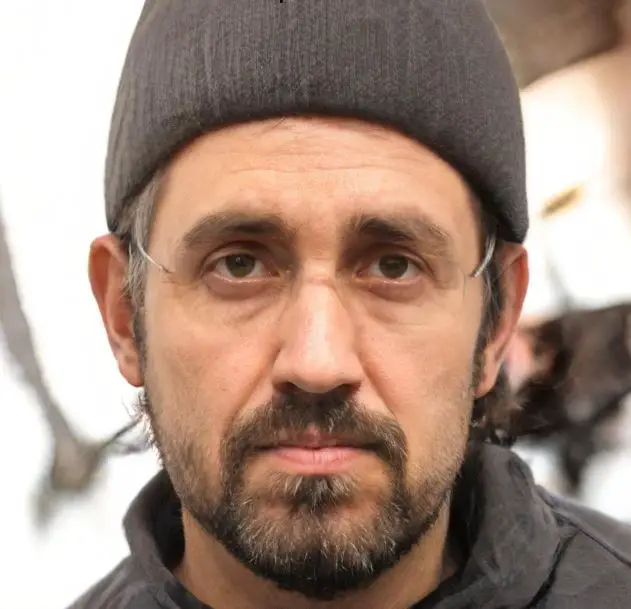
Hi, I’m TBone, a DJ with over 20 years of experience spinning tunes in clubs, on cruises, and at weddings. With a massive collection of vinyl and CDs, I always know the perfect tracks for any occasion and love sharing my passion for music through my website, Level Tunes.