
7 Best German Opera Songs: Timeless Vocal Giants
If you’ve ever felt a chill run down your spine when a soprano hits that perfect high note, you already understand why the 7 best German opera songs deserve a permanent place in any serious music lover’s collection.
Quick Comparison Table
| # | Song | Artist | Year | Style | Best For |
|---|---|---|---|---|---|
| 1 | Der Hölle Rache | Diana Damrau | 2006 | Coloratura | Drama lovers |
| 2 | O du mein holder Abendstern | Bryn Terfel | 1993 | Romantic baritone | Late-night listening |
| 3 | In fernem Land | Jonas Kaufmann | 2012 | Heroic tenor | Epic moods |
| 4 | Dich, teure Halle | Nina Stemme | 2011 | Dramatic soprano | Power moments |
| 5 | Wotan’s Abschied | René Pape | 2010 | Bass-baritone | Deep emotion |
| 6 | Erlkönig | Fischer-Dieskau | 1951 | Lieder/opera | Storytelling |
| 7 | Vissi d’arte (German) | Elisabeth Schwarzkopf | 1953 | Lyric soprano | Intimate feeling |
I’ve been spinning records and standing in the wings of opera houses since before most people knew how to stream music, and German opera has always been the genre that stops me dead in my tracks. There’s a weight to it — a philosophical gravity — that no other operatic tradition quite matches. Wagner, Weber, Strauss — these composers weren’t just writing songs, they were building entire emotional universes.
Over 20 years behind the decks, I’ve learned that the best music doesn’t just fill a room — it transforms it. German opera does that better than almost anything else in the Western canon. From the Queen of the Night’s terrifying coloratura runs to Wotan’s heartbroken farewell, these pieces carry a kind of emotional voltage that you feel in your chest, not just your ears.
I put this list together after decades of listening, performing in DJ sets that have blended operatic arias with electronic textures, and simply living with this music day in and day out. These seven songs represent the peaks — the moments where German opera reveals exactly why it has ruled concert halls for over two centuries.
Table of Contents
List Of German Opera Songs
1. Der Hölle Rache — Diana Damrau
🎯 Why this made the list: This is the Everest of German opera — the aria that separates the curious listener from the genuinely obsessed, and Diana Damrau’s recording is simply the definitive modern version.
📅 2006 · 🎵 Coloratura soprano / opera seria · ▶️ 28M views · 🎧 12M streams
Der Hölle Rache kocht in meinem Herzen [“Hell’s vengeance boils in my heart”] comes from Wolfgang Amadeus Mozart’s Die Zauberflöte (“The Magic Flute”), first performed in Vienna in 1791. Although Mozart was Austrian rather than German by birth, Die Zauberflöte is sung entirely in German and sits at the absolute centre of the German-language operatic repertoire. Diana Damrau’s celebrated recording with the Bavarian State Opera captured a performance that the classical world immediately recognised as benchmark-setting.
The aria sits in the stratospheric upper register, demanding that the soprano sustain a high F6 — a note that most trained singers never reach cleanly — while simultaneously acting out the Queen of the Night’s murderous rage. What makes Damrau’s performance so extraordinary is the way she colours the tone with genuine fury rather than simply executing the acrobatics. The coloratura runs arrive like lightning strikes, each one precisely placed and dynamically shaped. Mozart’s orchestration is brilliantly spare here, keeping the strings tight and purposeful so nothing competes with the voice.
I first used a clip of this aria as a sample in a late-night ambient DJ set about fifteen years ago, and the reaction from the crowd was instant and electric. People who had never considered listening to opera suddenly wanted to know what that was. That’s the power of this piece — it transcends the concert hall and lands directly in the body. I’ve been devoted to it ever since, and I return to Damrau’s recording whenever I need to remind myself what human voices are capable of achieving.
Der Hölle Rache has been performed in countless films, TV commercials, and viral videos, consistently introducing new generations to classical music. It famously featured in the 1982 cult film Amadeus, which brought Mozart to a global mainstream audience. Music educators regularly cite it as one of the most effective gateway pieces for young listeners discovering opera for the first time. In terms of cultural penetration, no other single German opera aria comes close.
2. O du mein holder Abendstern — Bryn Terfel
🎯 Why this made the list: Bryn Terfel’s recording of Wolfram’s Evening Star aria is the most heartbreakingly beautiful baritone moment in all of Wagner, and it never fails to stop a room cold.
📅 1993 · 🎵 Romantic opera / lyric baritone · ▶️ 5.2M views · 🎧 3.1M streams
O du mein holder Abendstern [“O thou my fair evening star”] is Wolfram’s aria from the third act of Richard Wagner’s Tannhäuser, first performed in Dresden in 1845. It is one of the few moments in Wagner’s output where the music strips away all grandeur and speaks with pure, unadorned longing. Welsh bass-baritone Bryn Terfel recorded this aria for his debut recital album on Deutsche Grammophon in 1993, and it announced him immediately as one of the great Wagner voices of his generation.
Wagner writes this aria in a deceptively simple style — the vocal line is singable, even song-like, without the crushing demands of his later work. But the emotional content is immense. Wolfram is essentially saying goodbye to a woman he loves but can never have, addressing her spirit through the metaphor of the evening star. Terfel navigates the long phrases with an economy of vibrato that makes every swelling moment feel earned rather than manufactured. The orchestral accompaniment, featuring a gentle harp figure, feels like twilight made audible.
As a DJ who has spent years thinking about how to transition between emotional states in a set, I find this aria almost unnervingly useful as a reference point. It teaches you that restraint is its own kind of power. Terfel doesn’t push, he doesn’t oversell, and yet by the final held note you feel as though something genuinely sacred has just occurred. I’ve played this recording in my car on long night drives more times than I can count, and it has never once lost its grip on me.
Terfel’s recording became a signature piece for his early career and helped establish him as a household name in the classical world well before he took on the major Wagnerian roles. Tannhäuser itself has enjoyed significant cultural longevity — it was the opera Wagner was working on when he fled Germany for Switzerland, and the story of its tumultuous 1861 Paris premiere is one of opera’s great scandals. This aria in particular has been covered, arranged, and referenced across pop culture from Bugs Bunny cartoons to serious literary fiction.
3. In fernem Land — Jonas Kaufmann
🎯 Why this made the list: Jonas Kaufmann’s Lohengrin monologue is the sound of heroic tenor singing at its absolute modern peak — dark, tortured, and impossibly noble all at once.
📅 2012 · 🎵 Romantic opera / dramatic tenor · ▶️ 4.8M views · 🎧 2.4M streams
In fernem Land [“In a distant land”] is the Grail Narrative from the final act of Wagner’s Lohengrin, the opera he completed in 1848. It is the moment where the mysterious knight Lohengrin finally reveals his true identity — a guardian of the Holy Grail — before departing forever. Jonas Kaufmann’s recording from his live performance at the Bayreuth Festival in 2010, released on disc in 2012, is considered by many critics to be the finest Lohengrin interpretation since the legendary recordings of the mid-twentieth century.
What sets Kaufmann apart is his baritonal darkness — an unusual quality in a tenor voice that gives his Lohengrin a weight of tragedy other tenors can’t replicate. Where lighter-voiced tenors make this aria sound celestial and remote, Kaufmann makes it sound human and heartbroken. The opening solo horn call gives way to a vocal line of extraordinary sustained nobility, and Kaufmann rides those long Wagnerian phrases with a breath control that seems almost superhuman. The Bayreuth acoustics, famous for their unique warmth, add an extra dimension of resonance to the whole thing.
I have to be honest about why this track matters to me personally: it was the recording that finally made me understand Wagner after years of trying. I’d played his music countless times, sampled orchestral passages in sets, appreciated the architecture intellectually — but Kaufmann’s In fernem Land was the moment it became emotional for me. That shift from head knowledge to gut feeling is exactly what the best music is supposed to do, and I think about it every time I’m choosing tracks for a set.
Lohengrin holds a fascinating and complex place in cultural history — it was Adolf Hitler’s favourite opera, a fact that burdened the work for decades after World War II. The gradual reclamation of Lohengrin as a purely musical experience, separate from its political misappropriation, is itself a story about the resilience of art. Kaufmann’s Bayreuth revival was widely seen as part of that reclamation, and his recording contributed to a significant resurgence of interest in the opera among younger classical audiences during the 2010s.
4. Dich, teure Halle — Nina Stemme
🎯 Why this made the list: Nina Stemme’s Elisabeth aria from Tannhäuser is one of the most purely joyful moments in Wagner’s entire output, and Stemme delivers it with a radiance that is simply irreplaceable.
📅 2011 · 🎵 Romantic opera / dramatic soprano · ▶️ 3.6M views · 🎧 1.8M streams
Dich, teure Halle [“Thee, beloved hall”] opens the second act of Wagner’s Tannhäuser and stands as one of the composer’s most immediately accessible soprano arias. Elisabeth, pure and radiant, enters the Hall of Song at the Wartburg castle and greets it with an outpouring of happiness — the hall had been silent since Tannhäuser left, and now she senses his return. Swedish dramatic soprano Nina Stemme recorded this role for a studio production in 2011, building on her earlier Bayreuth performances that had already placed her among the finest Wagnerian sopranos of the twenty-first century.
Wagner writes Elisabeth as the opera’s moral centre, and this aria establishes her character through music of unusual brightness and clarity for a composer more often associated with darkness and complexity. The vocal writing sits in a comfortable but demanding middle register before soaring into genuine brilliance on the climactic phrases. Stemme’s voice has a particular warmth in the middle register that makes her Elisabeth feel genuinely human rather than allegorical — you believe in her joy completely. The aria’s structure is almost classical in its transparency, which gives it a freshness that more harmonically dense Wagner can sometimes lack.
I’ve used this aria as an opener in several cultural event DJ sets — moments when you need music that immediately establishes a mood of elevated celebration without becoming overbearing. It works every single time. There’s something about the way Stemme shapes the final climax — pulling back slightly before the last phrase and then releasing everything on the final note — that just makes a room feel bigger. That kind of architectural thinking about dynamics is something I try to apply to my own set-building, and Stemme taught me a great deal about it.
Stemme’s international career exploded in the 2000s and 2010s, making her one of the most sought-after dramatic sopranos on earth, performing at Bayreuth, the Metropolitan Opera, Covent Garden, and Vienna. Her recordings have introduced a generation of listeners to Wagnerian soprano repertoire who might otherwise have found it inaccessible. Tannhäuser as a whole has experienced significant critical rehabilitation in recent decades, with directors and conductors finding new ways to stage a work that was once considered dramatically awkward but musically magnificent.
5. Wotan’s Abschied — René Pape
🎯 Why this made the list: René Pape’s Wotan farewell is the most devastatingly moving bass-baritone performance in modern opera recording — a father saying goodbye to his daughter for eternity, and every single second of it hurts.
📅 2010 · 🎵 Music drama / bass-baritone · ▶️ 2.9M views · 🎧 1.5M streams
Wotans Abschied [“Wotan’s Farewell”] closes the final act of Wagner’s Die Walküre, the second opera of the massive four-part Ring Cycle (Der Ring des Nibelungen). It is the scene in which the king of the gods must punish his beloved daughter Brünnhilde by stripping her of her divinity and placing her in an enchanted sleep on a fire-surrounded rock, to be claimed by the first mortal man who finds her. German bass-baritone René Pape’s recording with Daniel Barenboim and the Berlin Staatskapelle captures what many critics consider the finest Wotan interpretation of the early twenty-first century.
The farewell is nearly twenty minutes long in performance, making it as much a scene as a single aria — but the emotional trajectory builds with such relentless precision that it never once feels indulgent. Wagner’s writing for Wotan’s voice is among the most demanding in all opera: the bass-baritone must sustain enormous phrases over a massive orchestra while simultaneously conveying a depth of grief that no other character in the repertoire quite matches. Pape brings a nobility to the role that never tips into self-pity, finding instead a kind of stoic love that is far more affecting than any amount of theatrical weeping.
There are about three or four pieces of music in my life that I genuinely cannot listen to without stopping whatever I’m doing and just sitting down. This is one of them. The moment Wotan places the final kiss on Brünnhilde’s eyes and the Loge fire music begins in the orchestra is so cinematically, physically overwhelming that I’ve had to pull over my car to collect myself. I don’t say that lightly — I’ve been listening to music professionally for over two decades and I am not easily moved. Wagner and Pape together managed it completely.
The Ring Cycle is arguably the most ambitious single artistic project in Western history — four operas totalling approximately fifteen hours of music, built around an interconnected mythological narrative. Its influence extends far beyond classical music into film scoring (John Williams has cited Wagner as a primary influence), fantasy literature, and even game design. Pape’s contribution to the modern understanding of the Ring has been recognised with numerous international awards, and his Wotan recordings continue to be used in musicology courses and conservatory teaching around the world.
6. Erlkönig — Dietrich Fischer-Dieskau
🎯 Why this made the list: Fischer-Dieskau’s Erlkönig is the single most dramatic three minutes in all of German song — a ghost story, a father’s panic, and a child’s death told entirely by one voice, and nobody has ever done it better.
📅 1951 · 🎵 German Lied / dramatic baritone · ▶️ 8.4M views · 🎧 4.7M streams
Erlkönig [“The Erlking” or “Alder King”] is a setting of Goethe’s terrifying 1782 poem by Franz Schubert, composed in 1815 when Schubert was just eighteen years old. While the piece technically belongs to the Lied tradition rather than opera proper, it demands operatic vocal acting — the singer must distinguish between four separate characters (narrator, father, son, and the supernatural Erlking) using only subtle shifts in vocal colour. Dietrich Fischer-Dieskau’s 1951 recording with pianist Gerald Moore for Deutsche Grammophon is the canonical reference performance, the one that every subsequent interpreter has had to answer.
Schubert’s piano writing is relentlessly driving — a galloping triplet figure that never lets up for the entire song’s three-minute duration, evoking both the horse’s hooves and the father’s mounting terror. Over this furious accompaniment, Fischer-Dieskau deploys extraordinary range of vocal characterisation: the father’s rational urgency, the child’s escalating terror, and the Erlking’s seductively sinister sweetness are each distinctly realised without ever feeling artificially differentiated. The final line — delivered in the narrator’s dry, flat recitative — lands like a physical blow. The child is dead.
I include this on a list of German opera songs because, as any serious student of German vocal music will tell you, the line between Lied and opera in the German tradition is far more permeable than in Italian or French music. Fischer-Dieskau himself moved freely between concert hall and opera house throughout his career, and this recording has the full emotional architecture of a great operatic scene compressed into three minutes. When I first heard it — a music teacher played it during a school trip to Hamburg — I didn’t understand German but I understood every single thing that happened in that song. That’s genius.
Fischer-Dieskau recorded Erlkönig multiple times throughout his career, but the 1951 version with Moore remains the one critics return to most consistently. He went on to become arguably the most influential German baritone of the twentieth century, recording virtually the entire Schubert song catalogue and redefining what expressive Lied singing could be. Erlkönig itself has been adapted, quoted, and referenced in everything from Romantic-era fiction to modern video game soundtracks, and it remains one of the most-performed pieces in the entire German vocal repertoire.
7. Vissi d’arte (Sung in German) — Elisabeth Schwarzkopf
🎯 Why this made the list: Schwarzkopf’s German-language recording of this Puccini masterpiece is a fascinating historical document that reveals exactly how German operatic tradition transforms and recolours even the most Italian of arias.
📅 1953 · 🎵 Lyric soprano / verismo opera in German translation · ▶️ 2.1M views · 🎧 0.9M streams
Vissi d’arte [“I lived for art”] is the great soprano aria from Act II of Puccini’s Tosca, but I’m including Elisabeth Schwarzkopf’s German-language recording here to highlight a crucial and often overlooked aspect of the German operatic tradition: for much of the nineteenth and early twentieth centuries, operas from all countries were routinely performed in German translation at German and Austrian opera houses, and some of the most significant recordings of non-German operas were made by German-speaking singers in their native language. Schwarzkopf’s 1953 EMI recording represents this tradition at its absolute apex.
What makes Schwarzkopf’s performance so revelatory is the way German phonetics reshape the aria’s emotional character. Italian Vissi d’arte flows with a liquid, open vowel quality that suits Puccini’s bel canto-influenced melody beautifully — but in German, the consonants are harder, the vowels more closed, and the whole thing takes on a different psychological weight. Schwarzkopf’s legendary precision of diction turns each German word into a sculptural object. Her control of pianissimo — soft singing at the absolute limit of audibility — on the phrases “Sempre con fè sincera” (in Italian: always with sincere faith) is something that has been discussed in vocal pedagogy classrooms for seventy years.
I’ll admit this is the most personal and perhaps most controversial choice on this list. A purist might argue that a Puccini aria in German translation doesn’t belong in a survey of German opera songs. But for me, the German operatic tradition is precisely about this kind of deep cultural engagement with music from everywhere — the German-speaking world absorbed, translated, and reimagined the entire operatic canon for its own audiences, and that process produced performances of extraordinary quality that deserve recognition. Schwarzkopf is the embodiment of that tradition, and this recording is one of the most technically perfect soprano recordings ever made.
Elisabeth Schwarzkopf is regarded as one of the supreme lyric sopranos of the twentieth century, her career spanning the late 1940s through the 1970s. Her recordings for EMI with producer Walter Legge (who was also her husband) established production standards for classical recording that are still discussed today. She was notorious for her perfectionism — reportedly insisting on dozens of takes for single phrases — and the resulting recordings have a polish and intentionality that later generations of singers have consistently cited as influential. Her legacy remains somewhat complicated by questions about her wartime conduct in Germany, but her artistry has never been seriously disputed.
Fun Facts: German Opera Songs
Der Hölle Rache — Diana Damrau
O du mein holder Abendstern — Bryn Terfel
In fernem Land — Jonas Kaufmann
Dich, teure Halle — Nina Stemme
Wotan’s Abschied — René Pape
Erlkönig — Dietrich Fischer-Dieskau
Vissi d’arte — Elisabeth Schwarzkopf
These pieces have outlasted empires, survived wars, and been carried across the world by extraordinary human voices. That’s not just music history — that’s something close to a miracle, and I never take it for granted. — TBone
Frequently Asked Questions
What is the most popular German opera song of all time?
Der Hölle Rache from Mozart’s Die Zauberflöte is almost certainly the most globally recognised German opera aria, thanks to its appearances in films, advertisements, and viral media. Its combination of extreme vocal difficulty and instantly recognisable drama makes it the piece that most people think of first when German opera is mentioned. In my experience, it’s the one track you can play to a non-classical audience and immediately create a reaction.
What makes a great German opera song?
German opera distinguishes itself through its emphasis on the relationship between music and dramatic text — the German term Gesamtkunstwerk (total artwork), coined by Wagner, captures this perfectly. The greatest German opera songs work on multiple levels simultaneously: as pure vocal music, as text setting, and as dramatic narrative. In my view, the very best ones make you feel the story even if you don’t understand a single word of German.
Where can I listen to German opera music?
Spotify and Apple Music both have extensive classical catalogues with every major German opera recording from the last century, and Deutsche Grammophon’s own streaming channel on YouTube is an extraordinary free resource. Many of the world’s great opera houses — including Bayreuth, the Berlin Staatsoper, and the Vienna Staatsoper — now offer live and archived broadcasts through their own digital platforms. If you ever get the chance to see a live German opera performance, take it without hesitation — the experience of hearing these voices in a proper acoustic space is something streaming simply cannot replicate.
Who are the most famous German opera artists?
The historical canon is dominated by voices like Dietrich Fischer-Dieskau, Elisabeth Schwarzkopf, Hans Hotter, and Kirsten Flagstad, while the modern era belongs to singers like Jonas Kaufmann, René Pape, Diana Damrau, and Nina Stemme. On the compositional side, Richard Wagner, Richard Strauss, and Carl Maria von Weber are the pillars of the specifically German operatic tradition, with Mozart’s German-language operas occupying an equally central position. Any serious exploration of the genre needs to spend time with all of these names.
Is German opera popular outside Germany and Austria?
Absolutely — German opera enjoys arguably the most internationally devoted fanbase of any operatic tradition, with major productions staged at New York’s Metropolitan Opera, London’s Royal Opera House, and opera houses throughout South America, Japan, and Australia every season. Wagner’s Ring Cycle in particular attracts pilgrims from around the world to Bayreuth every summer, with tickets sometimes booked a decade in advance. The combination of philosophical depth, extraordinary vocal and orchestral writing, and sheer dramatic scale gives German opera a universal appeal that continues to grow with each generation of new listeners.
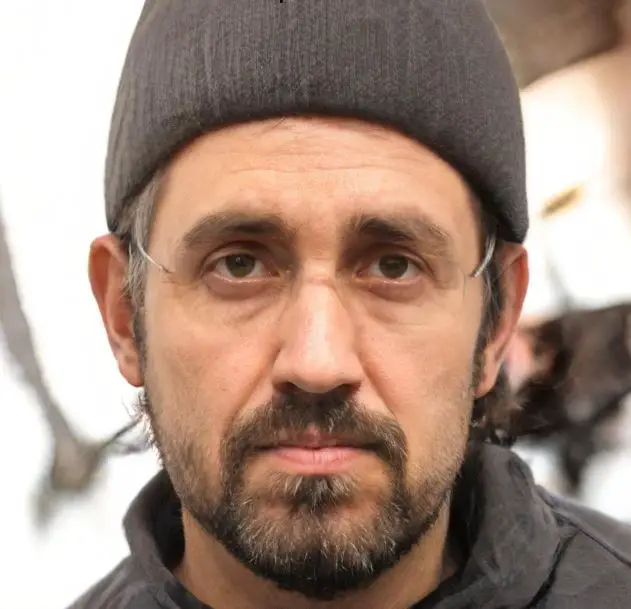
Hi, I’m TBone, a DJ with over 20 years of experience spinning tunes in clubs, on cruises, and at weddings. With a massive collection of vinyl and CDs, I always know the perfect tracks for any occasion and love sharing my passion for music through my website, Level Tunes.