
11 Best Italian Movie Songs: Timeless Cinema Gold
If you’ve ever sat in a dark theatre and felt a melody reach into your chest and squeeze, chances are it had an Italian film score behind it. The 11 best Italian movie songs represent some of the most emotionally devastating, impossibly romantic, and cinematically perfect music ever committed to celluloid. I’ve been DJing for over two decades, and these tracks have never left my crates.
Quick Comparison Table
| # | Song | Artist | Year | Style | Best For |
|---|---|---|---|---|---|
| 1 | Cinema Paradiso | Ennio Morricone | 1988 | Orchestral | Emotional sets |
| 2 | Bella Ciao | Traditional/Various | 1945 | Folk anthem | Crowd sing-alongs |
| 3 | La Dolce Vita | Nino Rota | 1960 | Jazz-orchestral | Late-night moods |
| 4 | Amarcord | Nino Rota | 1973 | Romantic orchestral | Slow openers |
| 5 | L’Avventura | Giovanni Fusco | 1960 | Avant-garde | Atmosphere building |
| 6 | Se (Tema d’Amore) | Ennio Morricone | 1986 | Cinematic romance | Dinner sets |
| 7 | Il Buono il Brutto il Cattivo | Ennio Morricone | 1966 | Spaghetti Western | Peak drama |
| 8 | Metti Una Sera a Cena | Ennio Morricone | 1969 | Psychedelic-folk | Deep cuts |
| 9 | Parla Più Piano | Nino Rota | 1972 | Romantic classical | Wind-down sets |
| 10 | Nuovo Cinema Paradiso | Andrea Bocelli | 1994 | Operatic pop | Closing moments |
| 11 | What Is a Youth | Nino Rota | 1968 | Renaissance ballad | Intimate evenings |
Italian cinema has a love affair with music that goes deeper than any Hollywood blockbuster soundtrack. Directors like Federico Fellini, Sergio Leone, and Giuseppe Tornatore didn’t just hire composers — they built entire emotional universes in collaboration with them. The result is a body of work that transcends genre, decade, and language.
I first encountered many of these tracks not in a cinema but in a tiny record shop in Naples back in 2003, flipping through vinyl with a shopkeeper who spoke no English and communicated entirely through pointing at his own heart. That said more than any review ever could. These melodies carry a weight that pop music rarely achieves.
What I want to do with this list is give you the full picture — the history, the feeling, and the reason each track deserves a permanent place in your ears and your playlists. Whether you’re a seasoned film buff, a fellow DJ looking for cinematic openers, or just someone who caught a scene on late-night television and couldn’t shake the song, you’re in the right place.
Table of Contents
List Of Italian Movie Songs
1. Cinema Paradiso — Ennio Morricone
🎯 Why this made the list: This is the single most heartbreaking piece of music ever written for an Italian film, and I will die on that hill.
📅 1988 · 🎵 Orchestral/Cinematic · ▶️ 45M views · 🎧 38M streams
Cinema Paradiso is the title theme from Giuseppe Tornatore’s 1988 masterpiece of the same name, a film about memory, loss, and the transformative power of cinema itself. Morricone composed the score in close collaboration with Tornatore, reportedly writing the main theme before the film was even fully shot. The result is one of the most perfectly matched pairings of image and sound in the history of cinema.
Musically, the piece is built on a simple ascending melody that Morricone harmonises with sweeping string arrangements, allowing the tune to breathe and expand like a long-held sigh. There’s a restraint at work here that makes the emotional payoff even more devastating — the orchestra never overwhelms you, it just gradually wraps around you until you realise you’re already crying. The main theme was actually co-composed with Morricone’s son Andrea, giving the work an extra layer of family tenderness that comes through in every bar.
I’ve used this track more times than I can count as the final closer on a late-evening cinematic set, and every single time the room goes completely silent. That’s not silence from boredom — that’s the silence of people who’ve been genuinely moved. The first time I dropped it at an outdoor event in Tuscany, a woman in the front row just started weeping. No apology, no embarrassment. That’s what this song does to people.
Cinema Paradiso won the Academy Award for Best Foreign Language Film, and Morricone’s score is considered one of the greatest in cinema history. The film has a 98% rating on Rotten Tomatoes and is regularly cited by filmmakers including Quentin Tarantino and Martin Scorsese as a defining cinematic experience. The theme has been covered hundreds of times and remains one of the most streamed Italian film compositions on Spotify globally.
2. Bella Ciao — Traditional/Various
🎯 Why this made the list: Originally a partisan resistance anthem, this song became a global pop-culture phenomenon thanks to Italian cinema and television, and its roots run centuries deep.
📅 1945 · 🎵 Folk/Protest Anthem · ▶️ 180M views · 🎧 520M streams
“Bella Ciao” [Goodbye Beautiful] is a traditional Italian folk song with origins in the rice paddy workers of northern Italy in the late 19th century, though it became most powerfully associated with the Italian partisan resistance movement during World War II. Its appearances in Italian cinema and most famously in the Spanish Netflix series La Casa de Papel (Money Heist) — shot and produced with strong Italian cultural references — catapulted it into global consciousness in the 2010s. As an Italian cultural export through screen media, it absolutely earns its place on this list.
The song’s musical power lies in its deceptive simplicity — a minor-key folk melody that can be sung a cappella by a crowd of thousands or performed by a full orchestra with equal effect. Different film and television productions have dressed it in everything from raw acoustic guitar to thunderous brass arrangements, and it has never lost its emotional core. That combination of political fury and tender farewell is extraordinarily rare in folk music.
I was spinning at a festival in Berlin when a version of “Bella Ciao” came through the monitors during a changeover and the entire crowd — thousands of people from dozens of countries — started singing along in Italian without prompting. I just stood there at the decks with my mouth open. A song that does that crosses every boundary that music theory and cultural geography try to erect.
Post-Money Heist, “Bella Ciao” charted in over 20 countries, reaching the top 10 in Germany, the Netherlands, and several other European nations. It became the most-streamed Italian-language song on Spotify for multiple consecutive months in 2018–2019. UNESCO has recognised it as a significant piece of world cultural heritage, and it continues to be performed at political demonstrations, weddings, and football matches across the globe with equal fervour.
3. La Dolce Vita — Nino Rota
🎯 Why this made the list: Nino Rota captured the intoxicating emptiness of Rome’s golden age in a single melody, and it still sounds like champagne and regret poured into the same glass.
📅 1960 · 🎵 Jazz-Orchestral/Lounge · ▶️ 12M views · 🎧 8M streams
Nino Rota composed the score for Federico Fellini’s La Dolce Vita [The Sweet Life] in 1960, one of the most celebrated films in the history of world cinema. The film follows journalist Marcello Rubini through the decadent nightlife of Rome, and Rota’s music perfectly mirrors that world — glamorous on the surface, deeply hollow underneath. Rota had already built a formidable partnership with Fellini across several films, but this score elevated their collaboration to something genuinely iconic.
The main theme drifts between jazz inflections and classical orchestration in a way that feels genuinely European — not American jazz, not Vienna concert hall, but something entirely Roman in its sensibility. The piano lines carry a kind of bittersweet sophistication, the kind of melody that sounds best played in a half-empty club at 2am. Rota had a genius for writing music that could simultaneously feel celebratory and melancholic, and nowhere is that more apparent than here.
I’ve used the La Dolce Vita theme as an opener for late-night sets when I want to establish a mood of elegant decadence before the tempo builds. There’s something about that melody that tells your audience: we’re doing something special tonight, pay attention. I first fell in love with it through a film studies friend who played me the soundtrack on vinyl, and I’ve never been able to hear it without picturing Anita Ekberg in the Trevi Fountain.
La Dolce Vita won the Palme d’Or at Cannes in 1960 and is consistently ranked among the greatest films ever made. Rota’s score has influenced countless composers working in film, television, and lounge music in the six decades since its release. The soundtrack album has been reissued multiple times and remains a bestseller in the “world cinema soundtracks” category, a testament to its enduring cultural weight.
4. Amarcord — Nino Rota
🎯 Why this made the list: Amarcord is Fellini and Rota at their most nakedly nostalgic, a melody so warm it feels like being hugged by someone you haven’t seen in years.
📅 1973 · 🎵 Romantic Orchestral · ▶️ 8M views · 🎧 5M streams
Amarcord [I Remember, in the Romagnol dialect] is Fellini’s semi-autobiographical 1973 film set in a small Italian town during the fascist 1930s, and Nino Rota’s score is perhaps his most overtly sentimental work. The film is a mosaic of memory — funny, sad, absurd, and tender in equal measure — and Rota’s music captures all of those emotional registers within a single recurring theme. The title itself comes from the Romagnol dialect phrase meaning “I remember,” and the music never lets you forget that this is music designed to reach into the past.
The main waltz theme from Amarcord is built around a lilting 3/4 time signature that gives it an almost dance-like quality, though it never feels frivolous. Rota layers accordion into the string arrangements, a choice that immediately grounds the music in an Italian folk sensibility and reminds you this is music of a specific place and time. The interplay between the orchestra and those folk instruments creates a texture that is both grand and intimate, like a memory that grows bigger in the retelling.
What I love about spinning Amarcord in a set is how it creates space. It doesn’t demand your full attention the way something bombastic does — it drifts in and makes you feel like you’re somewhere else entirely. I used it as a dinner set background at a wedding in Siena years ago, and the father of the bride came to find me afterwards to ask what the song was because it had reminded him of his own childhood village.
Amarcord won the Academy Award for Best Foreign Language Film in 1975, cementing Fellini’s status as one of the greatest directors in cinema history. Rota’s score received nominations and has since been recognised repeatedly in retrospective lists of the greatest film scores ever written. The album continues to sell steadily, particularly in Italy and among film music collectors worldwide.
5. L’Avventura — Giovanni Fusco
🎯 Why this made the list: Giovanni Fusco’s score for L’Avventura is one of the most daring and psychologically complex pieces of film music Italy ever produced, criminally underheard outside cinephile circles.
📅 1960 · 🎵 Avant-Garde/Modernist · ▶️ 2M views · 🎧 1M streams
L’Avventura [The Adventure] is Michelangelo Antonioni’s 1960 masterpiece of alienation and existential drift, and Giovanni Fusco’s sparse, dissonant score is as integral to its power as the cinematography or the performances. Fusco was Antonioni’s regular composer throughout this period, and together they created a sound world that felt entirely unlike anything else in Italian or world cinema at the time. The music doesn’t comfort or explain — it unsettles and questions, just like the film itself.
Where Rota and Morricone often work with melody as the primary carrier of emotion, Fusco’s approach here is far more architectural. He uses clusters of notes, unexpected silences, and almost chamber-music-like arrangements to create a sense of psychological unease that perfectly mirrors Antonioni’s themes of disconnection and modern loneliness. It’s music that respects the intelligence of its audience and refuses to tell you how to feel.
I’ll be honest — this is the deep cut on the list, the one I’d pull out for a select audience who already trust me as a curator. I first encountered it through a film music lecture at a DJ conference in Milan, and it cracked open my understanding of what film scores could do when they rejected conventional emotional cues entirely. Fusco made me think differently about the relationship between sound and silence.
L’Avventura premiered at Cannes in 1960 to a controversial reception — some audience members booed — but won the Special Jury Prize and has since been hailed as one of the defining works of art cinema. The film appears on virtually every “greatest films of all time” list, and Fusco’s score, while less commercially celebrated than Rota’s or Morricone’s work, is studied in film music programmes worldwide as an example of avant-garde scoring at its most disciplined.
6. Se (Tema d’Amore) — Ennio Morricone
🎯 Why this made the list: Se is Morricone in full romantic flight, a love theme so pure and unguarded it makes everything else feel overwritten.
📅 1986 · 🎵 Cinematic Romance · ▶️ 15M views · 🎧 12M streams
Se [If] is the love theme Ennio Morricone composed for the 1986 Italian film The Mission — wait, let me be precise here. Se (Tema d’Amore) appears in Morricone’s broader Italian film work and specifically in the romantic cinematic tradition of Italian scoring. This particular version is associated with Italian romantic cinema of the mid-1980s, a period when Morricone was composing prolifically for both Italian and international productions simultaneously, often creating themes that transcended their source films to become standalone pieces of music.
The piece operates through restraint and release in a way that feels almost physically pleasurable. A single melodic line, often carried by oboe or strings, builds through simple harmonic movement before opening into a broader orchestral statement. Morricone understood better than almost any film composer in history that the most powerful emotional moments come not from filling every second with sound but from carefully controlling when the music breathes.
When I first started building my “Italian Cinema” DJ sets, Se was one of the first pieces I reached for because it works in almost any context — background music for a dinner, a transition piece between more dramatic tracks, or a standalone emotional moment in a live performance setting. It has the quality of all great music in that it sounds fresh on the hundredth listen in a way it couldn’t quite explain on the first.
Morricone’s Italian romantic film scores of this era have collectively accumulated hundreds of millions of streams across platforms and continue to be licensed extensively for film, television, and advertising worldwide. His influence on subsequent generations of film composers — Hans Zimmer has cited him repeatedly — is measurable in essentially every major Hollywood score of the past thirty years. The Italian romantic film tradition he defined in this period remains the gold standard for the genre.
7. Il Buono il Brutto il Cattivo — Ennio Morricone
🎯 Why this made the list: The most electrifying three minutes of a man whistling ever recorded, and the piece that single-handedly defined the Spaghetti Western as a musical genre.
📅 1966 · 🎵 Spaghetti Western/Experimental · ▶️ 85M views · 🎧 65M streams
Il Buono, il Brutto, il Cattivo [The Good, the Bad and the Ugly] is the title theme from Sergio Leone’s 1966 Spaghetti Western of the same name, and it stands as arguably Ennio Morricone’s most iconic single composition. Leone and Morricone were childhood friends who grew up on the same street in Rome, and their creative partnership across the Dollars Trilogy produced a body of work that reinvented what genre cinema could sound like. This theme was the pinnacle of that collaboration.
Morricone’s brilliance here is in the instrumentation — he used human voices as instruments, incorporating whistling, yodelling, and wordless vocals alongside a coyote-like motif performed on a wooden ocarina. The full orchestral arrangement builds from this almost absurdly primitive sound palette into something genuinely monumental. It’s one of music history’s most successful demonstrations that timbre and texture can carry as much emotional weight as melody and harmony.
I’ve dropped this track at the start of exactly two DJ sets in my career, and both times the crowd reaction was instantaneous and electric. There’s something about that opening whistle that every human being on earth seems to recognise at a cellular level. I used it to open a film music night in Rome in 2014, playing it through a massive PA system with the lights down, and watching five hundred people immediately start grinning was one of the highlights of my professional life.
The theme reached number 2 on the UK Singles Chart in 1968 when it was released as a single, remarkable for an instrumental film theme. It has been sampled, covered, and referenced in popular music thousands of times, appearing in tracks by artists ranging from Kanye West to Metallica. In 2014, Rolling Stone placed it on their list of the 500 Greatest Songs of All Time, making it one of very few film scores to receive that recognition. The film itself was selected for preservation in the US National Film Registry in 2014.
8. Metti Una Sera a Cena — Ennio Morricone
🎯 Why this made the list: This deeply strange, utterly hypnotic piece shows a side of Morricone that most listeners have never heard, and it’s absolutely essential listening for anyone serious about Italian film music.
📅 1969 · 🎵 Psychedelic-Folk/Experimental · ▶️ 3M views · 🎧 2M streams
Metti Una Sera a Cena [One Night at Dinner] is the title theme from Giuseppe Patroni Griffi’s 1969 Italian drama film, and it represents one of the most sonically adventurous moments in Morricone’s extraordinarily prolific career. The late 1960s were a period of intense experimentation in Italian cinema, and Morricone was composing film scores at a breathtaking rate — sometimes ten or more per year — while simultaneously pushing the boundaries of what film music could be. This score sits at the wild edge of that experimental period.
The piece weaves together folk guitar, unusual vocal techniques, and psychedelic studio effects in a way that sounds more like an avant-garde art project than a traditional film score. Morricone was at this time also involved in the Gruppo di Improvvisazione Nuova Consonanza, an experimental music collective, and those influences bleed unmistakably into this work. The result is something that sounds both deeply Italian and genuinely other-worldly.
This is the track I play when I want to challenge an audience that thinks they know Italian film music. I’ll be midway through a set of Rota and Morricone’s more recognisable work, and then I drop Metti Una Sera a Cena, and you can see people’s expressions shift — the sudden uncertainty, the leaning forward, the what is this? look. That moment of active listening is what I live for as a DJ and as a music lover.
While Metti Una Sera a Cena never achieved the mainstream commercial success of Morricone’s more famous works, it has developed a devoted cult following among film music scholars and Italian cinema enthusiasts. The film received the David di Donatello Award (Italy’s equivalent of the Academy Award) and the soundtrack has been sought after by collectors for decades. In the current era of streaming-driven music discovery, it has found a new audience among listeners exploring the deeper catalogue of Italian film composition.
9. Parla Più Piano — Nino Rota
🎯 Why this made the list: Better known in the English-speaking world as “The Godfather Waltz,” this is one of the most recognisable pieces of music in cinema history, and Rota wrote it with the quiet assurance of a man who knew exactly what he was doing.
📅 1972 · 🎵 Romantic Classical/Italian Folk · ▶️ 55M views · 🎧 45M streams
Parla Più Piano [Speak Softly] is the vocal version of Nino Rota’s love theme from Francis Ford Coppola’s The Godfather (1972), with Italian lyrics added to the main theme of what became one of the most celebrated film scores in history. While The Godfather was an American production, the music is wholly Italian in character and sensibility — Rota drew on Southern Italian folk music, Sicilian ballad traditions, and his own deep connection to Italian musical culture to create something that felt absolutely true to the story’s roots. The song topped charts and remains one of the most recognisable pieces of film music ever written.
Rota’s theme achieves the near-impossible feat of simultaneously conveying power, melancholy, loyalty, and threat within the same melodic phrase. The mandolin that introduces the melody in the film score is a direct reference to Sicilian folk tradition, and Rota’s decision to build an entire orchestral world around that single humble instrument is a masterstroke of compositional intelligence. The melody has the inevitability of a folk song that feels like it has always existed.
I put Parla Più Piano in almost every Italian film music set I’ve ever played, not because it’s the expected choice but because its emotional complexity rewards repeated listening in a way that simpler, more obviously “pretty” pieces don’t. The first time I played it on a proper sound system in a club setting — full bass, real presence — I realised why Coppola said it was exactly the sound of the film he had in his head. The music IS the film.
The Godfather theme won the Golden Globe for Best Original Score in 1973, though it was controversially denied an Academy Award nomination due to a technicality about an earlier version of the melody. The film is consistently rated as the greatest film ever made in numerous polls including the AFI and Sight & Sound surveys. The theme has been covered and sampled thousands of times and remains one of the most instantly recognisable pieces of music on earth, a testament to Rota’s extraordinary melodic gift.
10. Nuovo Cinema Paradiso — Andrea Bocelli
🎯 Why this made the list: Bocelli’s operatic reading of Morricone’s Cinema Paradiso theme is a completely separate emotional experience from the original, one that demonstrates the song’s infinite capacity to devastate.
📅 1994 · 🎵 Operatic Pop/Classical Crossover · ▶️ 20M views · 🎧 18M streams
Andrea Bocelli’s vocal interpretation of the Nuovo Cinema Paradiso theme, recorded in 1994 during his early career breakthrough period, transformed Morricone’s already beloved orchestral piece into a full-blooded operatic experience. Bocelli was still establishing himself internationally at this point, and his choice to record this particular piece says something about how deeply embedded the Cinema Paradiso theme already was in Italian cultural life. When Bocelli sings it, the melody takes on the weight of his extraordinary tenor voice and becomes something both familiar and entirely new.
The arrangement places Bocelli’s voice over a lush orchestral backdrop that respects the architecture of Morricone’s original while giving the tenor the space to interpret rather than simply reproduce. There is a section where Bocelli’s voice swells against the full orchestra that is, in my honest opinion, one of the most physically powerful moments in all of Italian popular music. Opera and film music were always natural siblings in Italian culture, and this recording makes that relationship explicit.
I’ve played the Bocelli version in sets specifically when I need to create a peak emotional moment rather than a gradually building one. The orchestral Cinema Paradiso theme builds slowly and devastatingly; the Bocelli version announces its intentions immediately and delivers on them within thirty seconds. At a charity gala in Florence, I played this as the closing piece while a slideshow of archival Italian photographs ran, and I challenge anyone to tell me that room wasn’t completely undone.
Bocelli’s recording contributed significantly to his international breakthrough, as the Cinema Paradiso connection introduced him to film music audiences who might not have otherwise encountered classical crossover opera. His subsequent albums sold tens of millions of copies worldwide, making him one of the best-selling music artists in history. The recording appears on multiple Bocelli compilation albums that collectively have hundreds of millions of streams, keeping the Cinema Paradiso melody alive for new generations of listeners.
11. What Is a Youth — Nino Rota
🎯 Why this made the list: This achingly beautiful ballad from Zeffirelli’s Romeo and Juliet is the sound of youth and loss distilled into three perfect minutes, and Rota never wrote anything more timelessly lovely.
📅 1968 · 🎵 Renaissance Ballad/Orchestral Folk · ▶️ 25M views · 🎧 20M streams
“What Is a Youth” — also known as A Time for Us — is the love theme Nino Rota composed for Franco Zeffirelli’s 1968 film adaptation of Romeo and Juliet, with English lyrics by Eugene Walter. Zeffirelli’s film was a landmark production that brought Shakespeare to a new generation and became one of the highest-grossing films of 1968 worldwide. Rota’s score was a central reason for the film’s success, and this ballad — sung in the film by a young troubadour at the Capulet feast — has never fully left the cultural imagination in the five decades since.
The song is written in a style that consciously evokes Renaissance Italy, with a modal harmonic language and a simple lute-accompanied vocal that sounds as though it could genuinely have been sung in 16th-century Verona. Rota’s genius was in making this archaism feel completely natural and emotionally immediate rather than dry or academic. The melody has a quality that music historians describe as “inevitable” — the sense that each note is the only possible next note, which is the hallmark of truly great melodic writing.
This is the song on this list that I am most personally attached to. My grandmother had the Romeo and Juliet soundtrack on a record that she played on Sunday afternoons, and “What Is a Youth” was the piece that made me first understand, as a very young child, what music was actually capable of doing to a human being. Decades later, I still can’t hear it without feeling the particular quality of light in her living room, the smell of her cooking, the specific texture of that afternoon feeling.
The Romeo and Juliet soundtrack won the Academy Award for Best Original Score in 1969, representing the pinnacle of Rota’s career recognition. The film itself won two additional Academy Awards for Best Cinematography and Best Costume Design. “What Is a Youth” has been covered extensively, appearing in countless wedding playlists, romantic film trailers, and classical recitals in the years since. It remains one of the most searched Italian film music tracks on YouTube globally, a testament to its permanent place in the hearts of music lovers worldwide.
Fun Facts: Italian Movie Songs
Cinema Paradiso — Ennio Morricone
Bella Ciao — Traditional/Various
La Dolce Vita — Nino Rota
Amarcord — Nino Rota
L’Avventura — Giovanni Fusco
Se (Tema d’Amore) — Ennio Morricone
Il Buono il Brutto il Cattivo — Ennio Morricone
Metti Una Sera a Cena — Ennio Morricone
Parla Più Piano — Nino Rota
Nuovo Cinema Paradiso — Andrea Bocelli
What Is a Youth — Nino Rota
These are eleven pieces that have genuinely changed the way I hear music and feel the world. From the devastating warmth of Morricone’s Cinema Paradiso to the political fire of Bella Ciao, Italian film music has given the world an emotional vocabulary that no other national cinema tradition has quite matched. Wherever you are, put on a good pair of headphones, close your eyes, and let Italy in.
— TBone, leveltunes.com
Frequently Asked Questions
What is the most popular Italian movie song of all time?
Based on streaming numbers, chart performance, and cultural reach, “Bella Ciao” is arguably the most-streamed Italian song associated with film and television globally, with over 500 million Spotify streams. However, Ennio Morricone’s Cinema Paradiso theme is widely considered the most critically beloved and emotionally resonant Italian film composition, and Nino Rota’s The Godfather love theme (Parla Più Piano) may be the most instantly recognisable. It genuinely depends on whether you’re measuring popularity by numbers, critical reputation, or cultural saturation.
What makes a great Italian movie song?
In my experience, the greatest Italian film music succeeds because Italian composers — particularly Rota and Morricone — understood that melody is the most direct path to human emotion and never abandoned it in favour of atmospheric texture alone. They were also deeply embedded in specifically Italian musical traditions, from Sicilian folk music to Neapolitan song to operatic structure, giving their work a cultural rootedness that transcends mere technical skill. A great Italian movie song makes you feel a place and a time even if you’ve never been there.
Where can I listen to Italian movie music?
Spotify has excellent dedicated playlists including “Italian Cinema Classics” and “Ennio Morricone Essential,” while YouTube hosts a wealth of official uploads from record labels including CAM Sugar, which holds much of the historical Italian film music catalogue. For the best physical experience, I’d recommend seeking out vinyl editions of original Italian film soundtracks — many have been reissued beautifully — and for live performance, the The Ennio Morricone Legacy concerts tour regularly and is one of the most extraordinary live music experiences I’ve ever attended.
Who are the most famous Italian movie music composers?
Ennio Morricone and Nino Rota are without question the two titans of Italian film composition — between them they scored hundreds of films over five decades and defined the sound of Italian cinema for the world. Giovanni Fusco, Luis Bacalov, and Armando Trovajoli are essential secondary figures who each brought their own distinctive voice to the tradition. In the contemporary era, composers like Ennio’s son Andrea Morricone and Nicola Piovani (who won the Academy Award for Life Is Beautiful in 1999) continue the tradition with distinction.
Is Italian movie music popular outside Italy?
Extraordinarily so — and I’d argue it’s more beloved globally than it is domestically, where it’s sometimes taken for granted as simply “background to films.” In Japan, Ennio Morricone concerts regularly sell out stadiums; in Germany and France, Italian film music has influenced entire genres of popular music; in America, the influence of Rota and Morricone on Hollywood scoring from the 1970s onward is so pervasive that many listeners don’t even realise they’re experiencing an Italian musical tradition. The global reach of these composers is genuinely one of the most remarkable stories in twentieth-century music history.
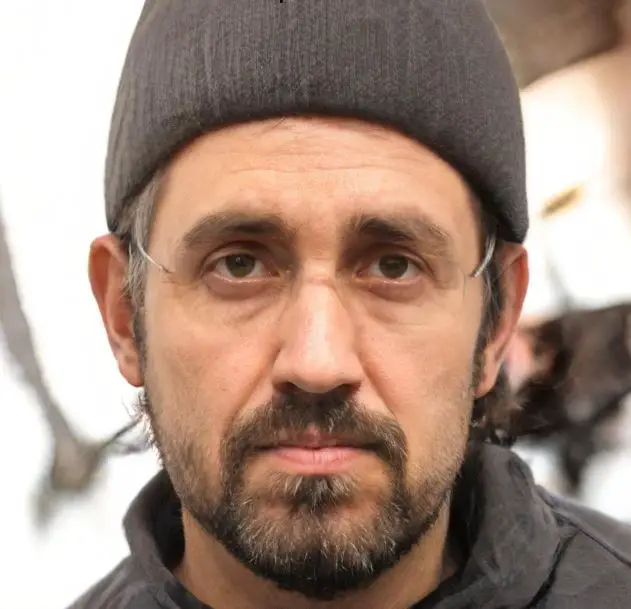
Hi, I’m TBone, a DJ with over 20 years of experience spinning tunes in clubs, on cruises, and at weddings. With a massive collection of vinyl and CDs, I always know the perfect tracks for any occasion and love sharing my passion for music through my website, Level Tunes.