
11 Best Jamaican Songs of All Time
If you’ve ever stood in a crowd and felt a bass line rearrange your heartbeat, chances are Jamaica had something to do with it. I’ve been spinning records for over two decades, and the 11 best Jamaican songs of all time sit in a category all their own — timeless, earthshaking, and impossible to ignore.
Quick Comparison Table
| # | Song | Artist | Year | Style | Best For |
|---|---|---|---|---|---|
| 1 | No Woman, No Cry | Bob Marley | 1974 | Roots Reggae | Any crowd |
| 2 | One Love | Bob Marley | 1977 | Reggae | Anthems |
| 3 | Redemption Song | Bob Marley | 1980 | Folk Reggae | Deep listening |
| 4 | Rivers of Babylon | The Melodians | 1970 | Rocksteady | Late nights |
| 5 | Pressure Drop | Toots & the Maytals | 1969 | Ska/Reggae | Dance floors |
| 6 | The Harder They Come | Jimmy Cliff | 1972 | Reggae | Motivation |
| 7 | Israelites | Desmond Dekker | 1968 | Rocksteady | Opening sets |
| 8 | Many Rivers to Cross | Jimmy Cliff | 1969 | Soul Reggae | Closing sets |
| 9 | Pass the Dutchie | Musical Youth | 1982 | Pop Reggae | Party vibes |
| 10 | Informer | Snow | 1992 | Dancehall | Club nights |
| 11 | Boom Bye Bye | Buju Banton | 1992 | Dancehall | Historical study |
Jamaica is a small island with a sound that swallowed the world whole. From the sun-cracked streets of Trench Town to festival stages on every continent, Jamaican music didn’t just travel — it colonized the global imagination in the best possible way. In my years behind the decks, I’ve watched audiences from Tokyo to Toronto lose their minds the second a reggae riddim drops.
What makes Jamaican music so enduring isn’t just rhythm — it’s truth. These songs carry the weight of lived experience, spiritual yearning, and political defiance in equal measure. Bob Marley alone could fill this entire list, but the island’s legacy runs so much deeper than one man, as brilliant as he was.
I’ve curated this list by ordering songs from most to least globally recognisable, drawing on chart history, streaming data, DJ experience, and cultural impact. Whether you’re a lifelong reggae head or just discovering the island’s genius, these 11 tracks will change how you hear music forever.
Table of Contents
List Of Best Jamaican Songs of All Time
1. No Woman, No Cry — Bob Marley & The Wailers
🎯 Why this made the list: The most emotionally devastating live performance ever captured on a reggae record, and the song that made the whole world feel Trench Town in their chest.
📅 1974 · 🎵 Roots Reggae · ▶️ 750M+ views · 🎧 1,200M+ streams
No Woman, No Cry was recorded live at the Lyceum Theatre in London in July 1975 and released on the Live! album, though the studio version first appeared on Natty Dread in 1974. The live recording became the definitive version — raw, communal, and alive in a way that studio takes rarely achieve. Though credited to Vincent Ford, a community cook and close friend of Marley’s in Trench Town, most believe Bob wrote it himself as a tribute to the people of his neighborhood.
Musically, the song is built on a gentle, rolling one-drop rhythm with Tyrone Downie’s organ weaving through the spaces like smoke. The chorus is deceptively simple — almost a lullaby — but the verses are dense with imagery: government yards, logwood fires, porridge in the morning. That contrast between comfort and hardship is what makes it feel like a warm hand on a cold night. The guitar interplay in the live version is some of the finest textural reggae work you’ll ever hear.
I’ve played this song more times than I can count, and I still feel it every single time. There’s a moment in the live recording where the crowd sings back to Marley that gives me chills no matter what system I’m playing it on. As a DJ, you learn quickly that this song belongs at any moment — it can open a set, close it, or rescue a floor that’s lost its way.
The song reached No. 8 in the UK upon its 1975 release and has been streamed well over a billion times across platforms. It’s consistently ranked among the greatest songs ever recorded by Rolling Stone and countless other publications. More than any statistic, though, it’s the song I’ve watched make the toughest people in the room go quiet and still — and that’s the truest measure of greatness.
2. One Love — Bob Marley & The Wailers
🎯 Why this made the list: The single greatest peace anthem in the history of popular music, and a song that genuinely changes the energy in any room it enters.
📅 1977 · 🎵 Roots Reggae · ▶️ 600M+ views · 🎧 1,500M+ streams
One Love first appeared as a ska track recorded by Bob Marley with the Wailing Wailers in 1965, drawing on Curtis Mayfield’s People Get Ready. The version the world knows best came from the 1977 album Exodus, which Time magazine later named the greatest album of the 20th century. By that point, Marley had survived an assassination attempt and was recording in London in self-imposed exile — the song’s message of unity was no longer a sentiment but a survival strategy.
The production on the Exodus version is gloriously full — warm keyboards, tight horns, and a rhythm section that breathes like a living thing. The addition of People Get Ready as a quoted coda gives it a gospel weight that lifts it beyond genre entirely. Chris Blackwell and the Island Records team helped shape the mix, and it remains one of the most perfectly balanced reggae recordings ever committed to tape.
In over twenty years of DJing, I’ve never seen One Love fail. It’s one of those rare songs that functions as both a crowd pleaser and a genuine artistic statement — it doesn’t compromise either to achieve the other. I’ve dropped it at beach parties, memorial services, wedding receptions, and packed nightclubs, and every time it lands the same way: people breathe deeper, stand taller, and look at each other differently.
The Jamaica Tourist Board later adopted One Love as an unofficial national anthem for tourism campaigns, which helped cement its global recognition beyond the reggae faithful. The BBC named it the Song of the Millennium in 1999. With over 1.5 billion Spotify streams and counting, it remains the most-streamed Jamaican song in history and a cornerstone of world music’s canon.
3. Redemption Song — Bob Marley
🎯 Why this made the list: A barefoot acoustic folk song from a reggae legend that somehow became one of the most politically powerful recordings in human history.
📅 1980 · 🎵 Folk Reggae / Acoustic · ▶️ 500M+ views · 🎧 900M+ streams
Redemption Song was the closing track on Uprising, Bob Marley’s final studio album, released in 1980. By the time he recorded it, Marley had been diagnosed with cancer and had only months to live — knowledge that lends the song an almost unbearable tenderness in retrospect. He stripped everything back to an acoustic guitar and his voice, which was an extraordinarily bold choice for a man whose music had always been rooted in ensemble electricity.
The lyrical content draws directly from a 1937 speech by Marcus Garvey, the Jamaican Pan-Africanist leader: “Emancipate yourselves from mental slavery.” Marley sets these words over a simple fingerpicked pattern that sounds both ancient and immediate. There are two versions — a solo acoustic take and a band arrangement — and both are extraordinary, but the sparse version is the one that stops time. The melody moves like someone speaking very slowly because they know these are important words.
I came to this song late, in my late twenties, after years of playing the dancier side of Marley’s catalog. When I finally sat with Redemption Song properly — headphones on, lights off — it genuinely changed how I thought about what music could do. There’s no rhythm section to hide behind, no production sheen, just a man with a guitar and something essential to say. That kind of courage in music is rare.
Joe Strummer of The Clash famously cited this as one of his favorite songs ever recorded. It has been covered by artists as diverse as Johnny Cash, Stevie Wonder, and Rihanna. The song didn’t chart significantly on release, but its stature has grown continuously in the decades since, and it now regularly appears on lists of the greatest songs ever made. It is Marley’s most literary and philosophically complete statement.
4. Rivers of Babylon — The Melodians
🎯 Why this made the list: A rocksteady psalm so deeply rooted in Rastafarian scripture that it transcends music and becomes something closer to prayer.
📅 1970 · 🎵 Rocksteady / Roots Reggae · ▶️ 80M+ views · 🎧 120M+ streams
The Melodians recorded Rivers of Babylon in 1970, with the song drawing its lyrics almost entirely from Psalms 137 and 19 of the Old Testament. Brent Dowe and Trevor McNaughton of the group adapted the biblical text with remarkable fidelity, creating something that felt simultaneously ancient and utterly contemporary. The song gained its widest international audience when it appeared on the soundtrack to the 1972 film The Harder They Come, which introduced Jamaican music to the world beyond the Caribbean.
The arrangement is a perfect example of the rocksteady-to-reggae transition — stately, measured, with a bass line that moves like a slow tide. The harmonies between Dowe and McNaughton are celestial, pitched somewhere between church choir and street-corner doo-wop. Producer Leslie Kong created a recording environment that gave the song enormous space, letting the spiritual weight of the lyrics breathe without rushing toward any kind of pop payoff.
I first heard this song on a battered compilation my older brother had, and the harmonies hit me so hard I had to sit down. Years later, spinning at a Jamaican heritage festival in London, I played it during the golden hour and watched several older Jamaican women in the crowd close their eyes and mouth every word. That image has stayed with me as a reminder of what music in the service of collective memory looks like.
Boney M covered the song in 1978 and took it to No. 1 in the UK, No. 1 in West Germany, and into the top 10 across Europe, making Rivers of Babylon one of the most recognizable melodies of the late 1970s. The original Melodians recording remains the definitive version for anyone who loves Jamaican music in its authentic form. It is a bridge between scripture, suffering, and song that few recordings in any genre have ever built so gracefully.
5. Pressure Drop — Toots & the Maytals
🎯 Why this made the list: The song that taught the world what “reggae” sounds like before the word itself was even widely used — raw, joyful, and unstoppable.
📅 1969 · 🎵 Ska / Early Reggae · ▶️ 70M+ views · 🎧 95M+ streams
Frederick “Toots” Hibbert wrote Pressure Drop in 1969 while incarcerated on a marijuana charge — an injustice he channeled directly into the song’s central metaphor of divine retribution falling on those who do wrong. Released on Studio One, the track appeared on the The Harder They Come soundtrack in 1972, which gave it the international platform it deserved. Toots & the Maytals were, alongside Bob Marley, the defining vocal group of Jamaican music’s golden era.
The musical construction of Pressure Drop is deceptively funky — it has as much in common with New Orleans R&B as it does with Kingston rocksteady. The horn arrangement punches and releases with perfect timing, and Toots’s voice is a force of nature: raw, gospel-soaked, and physically commanding in a way that very few singers in any genre can match. The rhythm section drives the track with an urgency that makes it almost impossible to stand still.
As a DJ, Pressure Drop is one of those weapons I reach for when I need to remind a crowd what a great rhythm feels like. It works at almost any BPM context, bridges genres effortlessly, and has a chorus that every person in every room seems to know even if they’ve never consciously learned it. I’ve played it in ska sets, reggae sets, and even as a bridge into soul-funk territory, and it always lands with authority.
The Rolling Stones, The Clash, and Bruce Springsteen have all cited Toots as a profound influence, and Pressure Drop in particular has been covered over 60 times by artists across genres. It reached No. 26 in the UK in 1975 and has maintained a consistent presence on classic rock and reggae radio ever since. Rolling Stone ranked the Harder They Come soundtrack — on which it appeared — among the greatest albums ever made.
6. The Harder They Come — Jimmy Cliff
🎯 Why this made the list: The title track of the film that introduced Jamaican music to the world — a defiant, swaggering declaration that remains the sound of pure ambition.
📅 1972 · 🎵 Roots Reggae · ▶️ 60M+ views · 🎧 85M+ streams
Jimmy Cliff wrote and recorded The Harder They Come for the 1972 Perry Henzell film of the same name, in which he also starred as the doomed outlaw Ivanhoe Martin. The film and its soundtrack were transformational cultural events — they gave the international music world its first sustained look at Kingston’s ghetto life, Rastafarian culture, and the volcanic talent living inside Jamaica’s sound system scene. Cliff’s performance, both on screen and on record, is one of the most charismatic of any Jamaican artist.
Musically, the title track is built on a driving, mid-tempo reggae groove with a guitar skank that has an almost cinematic quality — it sounds like someone walking toward something dangerous with complete confidence. The lyrics are a poetic manifesto of defiance: “I’d rather be a free man in my grave than living as a puppet or a slave.” Cliff’s vocal delivery combines vulnerability and bravado in a way that makes every word land like a physical blow.
I’ve always loved this song for its cinematic quality — when it drops in a set, it changes the narrative of the whole night. It feels like the beginning of something, a declaration of intent both from the artist and from the crowd. Playing it at a roots reggae night in Bristol a few years back, I watched the whole room shift posture — backs straighter, chins up — within eight bars. That’s the power of a song that was built to make people feel invincible.
The Harder They Come soundtrack became one of the most influential albums in the history of world music, credited with breaking reggae internationally alongside Marley’s subsequent rise. The film itself is now a set text in film schools worldwide. Jimmy Cliff was inducted into the Rock and Roll Hall of Fame in 2010, and The Harder They Come remains his signature recording — a monument to the spirit of Jamaican independence.
7. Israelites — Desmond Dekker & the Aces
🎯 Why this made the list: The first Jamaican song to crack the American Top 10, a milestone so significant it literally changed what was possible for the entire island’s music industry.
📅 1968 · 🎵 Rocksteady / Early Reggae · ▶️ 40M+ views · 🎧 55M+ streams
Desmond Dekker recorded Israelites in 1968 with producer Leslie Kong, and the song became a landmark in music history when it reached No. 9 on the US Billboard Hot 100 in 1969 — the first Jamaican record to break into the American mainstream. It had already gone to No. 1 in the UK in 1969, making Dekker the first Jamaican artist to score a British chart-topper. The song draws on the Rastafarian identification of Black Jamaicans with the biblical Israelites in Babylonian captivity.
The arrangement sits precisely on the cusp between rocksteady and reggae — the rhythm has the stateliness of rocksteady but the drum patterning already anticipates the one-drop that would define roots reggae. Dekker’s voice is extraordinary: high, clear, and pitched with an earnest intensity that makes his descriptions of poverty and struggle feel both personal and universal. The melodic hook is so strong that even listeners who can’t understand every word feel the emotional content immediately.
I remember playing Israelites early in a set at a vintage reggae night and being startled by how many people — from different backgrounds, different age groups — knew every syllable. Songs that become that deeply embedded in shared cultural memory are rare, and Dekker achieved it on his first major international release. It’s a humbling track to play because it reminds you how high the bar was set, and how early.
The song has been featured in numerous films and television soundtracks, most notably in the UK television advert for Maxell cassette tapes in the 1980s, which reintroduced it to a new generation. It charted again in the UK in 1975. Dekker’s influence on subsequent Jamaican and British artists is incalculable — he was cited as a direct inspiration by the two-tone ska movement of the late 1970s and is rightly regarded as one of the founding fathers of reggae’s international story.
8. Many Rivers to Cross — Jimmy Cliff
🎯 Why this made the list: One of the most devastatingly beautiful soul-reggae recordings ever made, proof that Jimmy Cliff’s artistic depth has never received the recognition it deserves.
📅 1969 · 🎵 Soul Reggae / Gospel · ▶️ 25M+ views · 🎧 40M+ streams
Jimmy Cliff wrote Many Rivers to Cross in 1969 during a period of personal and professional difficulty, channeling genuine despair into one of the most emotionally transparent songs in Jamaican music history. It appeared on his debut album and was later included on the Harder They Come soundtrack, which gave it the audience it deserved. Cliff has said in interviews that he wrote the song when he was truly lost, and that sincerity is audible in every note.
The musical arrangement is a fusion of gospel, soul, and reggae that feels timeless — it could have been recorded in the 1950s, the 1990s, or yesterday. The string arrangement swells with a cinematic sweep, and Cliff’s vocal is restrained in the verses before opening up into something almost operatic in the chorus. The production, handled by Leslie Kong, creates a cathedral-like space around the voice that gives the song enormous emotional room.
This is my personal closing-set song — the one I reach for when I want to send people home feeling something real. I’ve used it at the end of late-night sets when the crowd is warm and tired and receptive, and it never fails to create one of those collective moments of stillness that remind you why live music matters. It’s a song that asks something of its listener, and audiences always rise to meet it.
UB40, Harry Nilsson, and Linda Ronstadt are among the many artists who have covered Many Rivers to Cross, but none have matched the wounded dignity of Cliff’s original. The song was ranked by Rolling Stone among the 500 Greatest Songs of All Time and is considered by many music historians to be Cliff’s artistic masterpiece — even more than his more famous recordings. Its influence on the soul-reggae fusion that would emerge in the 1970s and 1980s is profound and ongoing.
9. Pass the Dutchie — Musical Youth
🎯 Why this made the list: A euphoric, infectious pop-reggae anthem from five Birmingham teenagers that became one of the biggest UK hits of 1982 and brought Jamaican music to a generation of new listeners.
📅 1982 · 🎵 Pop Reggae / Dancehall · ▶️ 120M+ views · 🎧 150M+ streams
Musical Youth were a group of Birmingham school kids — most of them between 11 and 15 years old at the time of recording — with Jamaican heritage who adapted a song called Pass the Kouchie by Mighty Diamonds, swapping the marijuana reference for the more radio-friendly “dutchie” (a Dutch cooking pot). Released in September 1982, it shot to No. 1 in the UK and No. 10 in the US, becoming one of the fastest-selling singles in British chart history at that point. The song’s youth, energy, and complete lack of pretension made it irresistible.
The production is bright, danceable, and sits comfortably between the dancehall sound emerging in Jamaica and the pop sensibility of early 1980s British music. The rhythm section — anchored by Dennis Seaton’s bass — has genuine Jamaican rhythmic DNA, and the call-and-response vocal arrangement gives the song a community feel that mirrors the original roots tradition. It’s a pop record that doesn’t sound embarrassed about being pop, which is a rare and admirable quality.
I was a kid when this came out, and it was genuinely the first reggae-adjacent song I remember falling in love with. It opened a door that led me, eventually, to Marley, Toots, Burning Spear, and everything else. I’ve never been too cool to acknowledge that — pop music’s gateway function is real, and Pass the Dutchie performed that function for an entire generation of future reggae fans in Britain and beyond.
The song won Musical Youth a BRIT Award nomination and led to collaborations with Donna Summer and Michael Jackson’s management. It has been sampled and referenced across decades of popular music. More importantly, it represents something genuinely special: a moment when Jamaican musical culture, transplanted to Birmingham, produced something that both honored its roots and confidently walked into the future.
10. Informer — Snow
🎯 Why this made the list: A Toronto dancehall record delivered in a patois so authentic that most of the world assumed Snow was Jamaican — and the fastest-rising debut single in Billboard history at the time.
📅 1992 · 🎵 Dancehall Reggae · ▶️ 180M+ views · 🎧 220M+ streams
Snow — born Darrin Kenneth O’Brien — was a white Canadian from a tough Toronto housing project who grew up surrounded by Jamaican immigrant culture and absorbed its patois and musical sensibility completely. Informer, produced by MC Shan and featuring Jamaican vocalist Rosie on the hook, was released in 1992 and became a phenomenon: it spent seven weeks at No. 1 on the Billboard Hot 100 in 1993 and went Top 5 in the UK. Its success sparked enormous debate about cultural authenticity and appropriation that was well ahead of its time.
The track is pure dancehall in construction — a computerized riddim, toasting vocals delivered at rapid pace, and a hook built for maximum earworm efficiency. Snow’s delivery is so embedded in Jamaican vocal tradition that it genuinely fooled many listeners into assuming he was from Kingston rather than Toronto. The patois is dense and largely uncompromising for a mainstream pop hit, which makes its chart success all the more remarkable. Producer MC Shan brought hard-won hip-hop production values to a Jamaican rhythmic template with impressive results.
I include Informer on this list because its story is inseparable from Jamaica’s story — it demonstrates the island’s musical culture operating as a global transmission system, reaching Toronto housing projects and transforming a white Canadian kid into one of the most convincing dancehall vocalists of the early 1990s. That cultural reach is extraordinary and worth celebrating. Whenever I play it in a set, the room immediately divides between people who lived through 1993 and those discovering it fresh — and both camps go equally wild.
The song’s success remains one of the more fascinating anomalies in pop history. Snow largely disappeared from the mainstream after Informer, but the record itself has never gone away — it maintains a robust streaming life and has been embraced by nostalgia playlists and dancehall revival nights alike. Its role in cementing dancehall as a viable international commercial format in the early 1990s, just before Sean Paul and Shaggy made it ubiquitous, deserves serious acknowledgment.
11. Boom Bye Bye — Buju Banton
🎯 Why this made the list: One of the most historically significant and morally contested records in Jamaican music history — impossible to discuss the full scope of the island’s musical legacy without addressing it honestly.
📅 1992 · 🎵 Dancehall · ▶️ 15M+ views · 🎧 10M+ streams
Buju Banton released Boom Bye Bye in 1992 when he was just 19 years old, and the song became immediately and enduringly controversial for its violently homophobic lyrical content. It was withdrawn by PolyGram after international protest, and Buju Banton spent years under pressure to formally disown the recording — pressure that generated enormous debate about artistic freedom, cultural context, and accountability within the reggae and dancehall community. I include it here not to endorse its message, which I find morally reprehensible, but because any honest account of Jamaican music history must confront its existence and impact.
Musically, the track sits within the “slackness” tradition of dancehall — a genre of provocative, boundary-pushing lyrical content that emerged as a direct counter to the Rastafarian roots tradition. The production is hard and minimal, built around a sparse digital riddim that was state of the art for Kingston’s dancehall scene in the early 1990s. Banton’s voice — even at 19 — is enormous, commanding, and rhythmically gifted in ways that made him immediately recognizable as a generational talent.
I’ve wrestled with including this song, and I want to be direct about that. I don’t play it, and I never will. But a list that claims to represent the most significant Jamaican songs of all time while silently skipping this one is being dishonest about the music’s full history, including its moral failures. Buju Banton went on to become one of the greatest artists in the history of Jamaican music — his subsequent catalog is extraordinary — and the evolution of his public position on this recording is itself part of a larger story about how Jamaican society has grappled with its own contradictions.
The song’s cultural impact is significant precisely because of the backlash it generated: it catalyzed international advocacy work within the reggae community, forced major labels to reckon with lyrical content from dancehall artists, and contributed to ongoing conversations about homophobia in Caribbean culture that continue to this day. Buju Banton has never formally repudiated the track, but his later work — particularly the spiritual album ‘Til Shiloh (1995) — represents an artistic evolution so profound it stands as one of the most remarkable second acts in music history. This entry is included with full acknowledgment of the harm the song caused and continues to cause.
Fun Facts: Best Jamaican Songs of All Time
No Woman, No Cry — Bob Marley & The Wailers
One Love — Bob Marley & The Wailers
Redemption Song — Bob Marley
Rivers of Babylon — The Melodians
Pressure Drop — Toots & the Maytals
The Harder They Come — Jimmy Cliff
Israelites — Desmond Dekker & the Aces
Many Rivers to Cross — Jimmy Cliff
Pass the Dutchie — Musical Youth
Informer — Snow
Boom Bye Bye — Buju Banton
That’s the list, and I stand behind every choice — including the uncomfortable ones. Jamaican music is one of humanity’s great artistic achievements, and it deserves to be written about with honesty, depth, and the kind of love that only comes from genuinely living with this music for decades. These 11 tracks are a starting point, not an ending — the island’s catalog is deep enough to fill a thousand lists. Keep digging, keep listening, and keep the bass turned up. — TBone
Frequently Asked Questions
What is the most popular Jamaican song of all time?
By streaming numbers and global recognition, One Love by Bob Marley & The Wailers holds the crown — over 1.5 billion Spotify streams and counting. But No Woman, No Cry runs it incredibly close, and in terms of emotional impact in live settings, I’d argue the live Lyceum version of No Woman, No Cry is the single greatest piece of recorded Jamaican music in existence.
What makes a great Jamaican song?
The best Jamaican songs fuse rhythmic innovation with lyrical depth — whether that’s the spiritual weight of roots reggae, the social realism of the rocksteady era, or the kinetic energy of dancehall. Authenticity is the core ingredient: Jamaica’s greatest music has always come from lived experience rather than commercial calculation. When rhythm, voice, and truth align in a Jamaican recording, the result is unlike anything else in the world.
Where can I listen to Jamaican music?
All the classics are available on Spotify and Apple Music, and YouTube has a treasure trove of live performances, official videos, and archival footage that no serious fan should miss. For the deepest experience, seek out live reggae nights in cities with large Jamaican communities — London, Toronto, New York, and Miami all have thriving scenes. Sound system events, in particular, give you the full-body physical experience that these songs were originally designed for.
Who are the most famous Jamaican artists?
Bob Marley is the undisputed global icon, but the island’s roster of legends is extraordinary: Jimmy Cliff, Toots Hibbert, Desmond Dekker, Burning Spear, Dennis Brown, Gregory Isaacs, Peter Tosh, Bunny Wailer, Buju Banton, Beenie Man, and Sean Paul are all essential names. More recently, Koffee has emerged as a generational talent carrying the tradition forward with remarkable confidence and grace.
Is Jamaican music popular outside Jamaica?
Jamaican music is arguably the most globally influential genre per capita of any music-producing nation on earth. Reggae’s impact on British punk, American hip-hop, African highlife, and global pop is immeasurable. UNESCO recognized reggae music as an Intangible Cultural Heritage of Humanity in 2018 — formal acknowledgment of what anyone who’s spent time behind the decks already knew: this music doesn’t just travel, it transforms everything it touches.
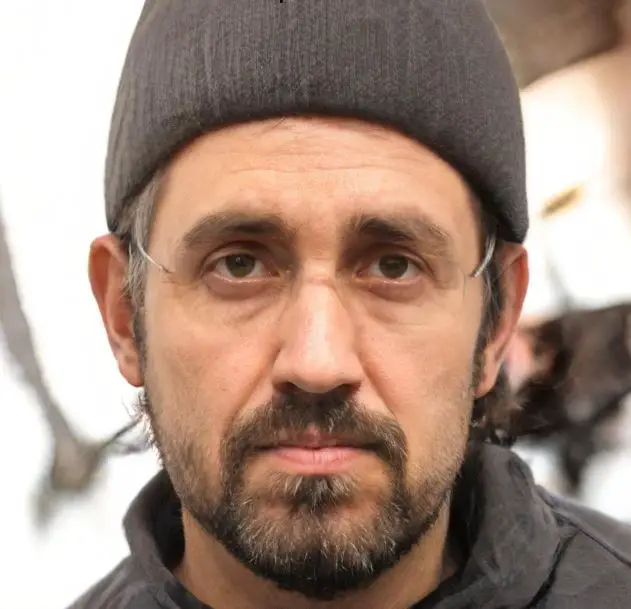
Hi, I’m TBone, a DJ with over 20 years of experience spinning tunes in clubs, on cruises, and at weddings. With a massive collection of vinyl and CDs, I always know the perfect tracks for any occasion and love sharing my passion for music through my website, Level Tunes.